tech help header 750

Send your queries to This email address is being protected from spambots. You need JavaScript enabled to view it. and let's see if we can help?

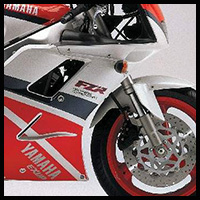
96 Yamaha FZR1000Q: I just ‘taken over’ my brother’s old 1989 Yamaha FZR1000, because he doesn’t want to ride it anymore but it has been standing for many years now.

I’ve just bought a new battery and finally managed to get the thing to fire up but it ran as rough as hell. Still, I did get some heat into the motor so I could drop the oil and then put in fresh stuff and a new filter as you mentioned in a previous question.

So now the carbs are off to sort out the rough running, and in pieces, of which there are many, but I have everything in order so they’ll be relatively easy to put back together.

My question though is, how would you clean out all the holes, jets and channels because normal carb cleaner doesn’t seem to be working as well as I’d imagine on the old contamination? Thought I’d ask the experts before I damage things due to impatience.

Hans

A: Believe it or not the best stuff to clean out those stubborn old parts is compression stabiliser spray, which can be bought from any general automotive parts dealer? It’s designed to remove old carbon from the top of pistons, so basically it’s a very strong carbon remover.

Simply spray it into the lid it comes with, about an inch or so will do, and throw in all the main jets, pilot jets, and anything else in that department and watch the fluid fizz.

Leave those parts in there for an hour or so and you’ll be amazed that they come out looking like new with no damage at all, then finally spray and clean with your carb cleaner because the compression fluid will leave behind an oily like residue. Problem solved Hans…

Kawasaki ZZ-R1100Hello Bill,

Can I get some advice please?

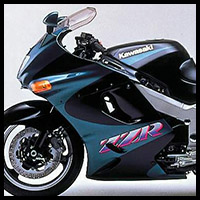
I run a 1993 ZZr 1100 D with about 45000 kms on the clock. I need to do an oil change and am contemplating switching to a semi synthetic oil such as Motul.

1. Do I have to flush the engine to get ride of all traces of the previous (current) mineral oil?

Whilst not absolutely necessary, we would recommend an engine clean product - won’t remove all traces of the previous oil, but as it cleans out all deposits it is a good general maintenance practice.  All of our synthetic oils are completely miscible with mineral oils and thus no adverse affects should occur if the engine is not flushed or if traces of the old oil remain.  Motul does offer a product called Engine Clean which can be used before the oil change.

2. Will semi synthetic oil have any adverse effects on 20 year old oil seals?

Strictly speaking synthetic oils should not affect 20 year old seals.  However, the issue of leaks can arise from worn or cracked seals. Mineral oils tend to build up a high soot content and in many cases this soot lodges itself in the cracks of the seals and then the soot sort of acts as a secondary gasket.  When you put a good quality synthetic oil in (or even use an engine flush) which has very good detergency properties it will clean this soot away exposing the cracked seals and thus allowing oil to seep through.  This is often why people say that using synthetics “attacks” or damages the seals.  This is completely untrue, the reason for the leaks is because the seals were already in need of replacement!

3. Will there be any real benefits in making the switch on such an old bike?

There are always benefits to switching to synthetics. In the engine operating process, whether new or old, metallic parts make contact with each other which is friction and wear. Th real question is how you want this natural friction and wear to occur - rapidly and unfavourably from what can be considered excessive wear when using a mineral oil, or would you prefer better engine protection with reduced friction and wear and also better clutch protection.  So the answer is “Yes”, there will be real benefits.

4. Will there be any adverse effects on the clutch?

Once again strictly speaking, No.  All of our oils are JASO MA2 approved - this means that they have achieved the highest rating that JASO currently tests for clutch performance - so there is no reason that the clutch should be affected adversely. However, depending on the oil that has been used in the bike previously you could encounter some initial clutch issues, while the good quality synthetic oils attempts to clean the contaminants from the older oil off the clutch. All the more reason to consider an engine clean (flush) before changing over.  If there is any effect - it will be short lived - 1000km’s max while the clutch gets cleaned by the  new fancy oil!

5. What grade of oil should I use if I make the switch?

See attached recommendation sheet (for Kawas in SA 10W40 is probably the right choice).

Thanks in anticipation of your response. All I have asked have given me conflicting opinions which has left me somewhat confused.

Regards

AllanKawasaki ZZ-R


HONDA CBR600FQ: Hi there, first of all it’s great to see the time you take to answer all of these queries, so I'm hoping you can help with mine?
I recently purchased a Honda CBR 600F3 with 45km on the clock. I think the guy I bought it from was scared of it and that’s why he was selling it, he also had very little knowledge of motorbikes and his wife bought it for him. I took it for a nice test drive and the clutch and gears seemed to be nice and smooth, but I could see some work needed doing, as any bike of this age would.

Now comes the catch. Three weeks later I started to ride her more confidently because she's lighter and quicker than my old Suzuki RF. 

But when I rev it hard to 10,000 rpm it pops out into neutral, I then have to pull in the clutch and let the revs die down and then gear up. 

I did a bit of troubleshooting, as far as I know because I'm no expert, and the chain doesn't seem overly tight either. I tested it again, making sure I was engaging the gear firmly and properly but still it popped out! I can cruise through the gears quite easily, it's only when the bike is pulling hard. It’s also quite hard to get up over the 170 km/h range, but I haven't tried very hard because of the gear problem.

So do you have any trouble shooting tips you can recommend, please?  

I've just moved to Ballito in Durban and don't know of any mechanics I can trust down here.

Tijn

A: 45km, perhaps you mean 45,000km? Anyway, first of all Tijn, make sure the gear lever and all of it’s linkages are nice and tight on the gearbox output shaft and not too ‘sloppy’. Also try and lower the gear lever a little to provide a more positive action.

Otherwise it could be very bad news because the selector dogs are possibly worn, which will cause it to jump out. If so you’ll have to take out the gearbox and have the offending gears undercut by a reputable engineering workshop – a lot of time and work. Does it happen in all gears or just second to third, for example?

Your bike should easily go past 170km/h. I’d check out the air filter to see if it’s old, blocked and/or full of dirt, which I would imagine it is, and new spark plugs might help as well. Or, if it’s been modified (exhaust and stuff), it could be running too lean and therefore needs bigger main jets and setting up correctly.


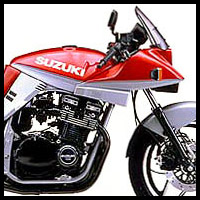
1983 GSX1100Q: I have a 1983 Suzuki GSX1100 Katana, which always runs well and we have a lot of fun with this classic old Suzuki.

But it’s always been an oil tight motor until now. All of a sudden oil is around each side of the barrel and blowing all over my legs, which is terrible for my new riding jeans.

I washed the bike to find out where it’s coming from and I thought it was from the head gasket but it seems to coming from around the front two middle cylinder studs.

So, have you had a similar problem with these old Suzuki motors and if so pray tell what you discovered so I can repair my Katana as well? 

And thanks for a very entertaining site too.

Korbus

A: I’ve repaired many GSX motors with this oily/dribbling problem and you’ll be pleased to know that it’s not the head gasket, but you’ll still have to take off the cam cover to repair it.

At each side of the exhaust camshaft sprocket is a cylinder head bolt that looks a bit like a chess piece, two of them. Take them out and you’ll see an o-ring on the top that becomes brittle over time and then the oil leaks past, down the cylinder stud, and sprays around the sides of the barrel, like you’ve said.

Do not replace with normal o-rings though because they can’t endure the heat. It’s called a viton o-ring that’s resistant to oil and heat, so you probably have to order those from your Suzuki dealer. Fit them nicely and the leak will be gone.


favicon4