tech help header 750

Send your queries to This email address is being protected from spambots. You need JavaScript enabled to view it. and let's see if we can help?

2013 BMW S1000RR FORKQ: I own a 2013 BMW S1000RR and I hardly ride it on the road but I do attend as many track days as possible and ride in the ‘A’ group, so I’d like to brag that I’m reasonably quick.

But since I’ve had the bike I do seem to be having problems with the front forks. They just don’t have the feel of my friends R1, which feel much better than this problematic front end of mine ever does.

I’ve tried fiddling and changing fork oil and stuff but they still feel a bit ‘choppy’ to say the least. So do you have any settings I could try and how often should I change the fork oil because my local BMW dealer doesn’t seem to have a clue, or care?

I know you’ve raced these bikes so I thought it would be best to run this question by you and hopefully you’ll send me in the right direction – literally?

Dave Commons

A: Yes, we have raced these bikes for a while now and to be honest BMW should give a S1000RR owner a formal and official apology and perhaps a gift voucher to spend at Woolworths, because the stock Sachs forks are shite items that shouldn’t even be on a bike of this caliber!

The only way to sort out these forks is to change all the internal parts for aftermarket superior performance parts from, say, Race-Tech for example, or the like. Fiddling and changing fork oil will make little or no difference, but for interests sake the fork oil relating to track use only should be changed at least every 20-hours of track time.

If you’re not happy best you just bring them to us at Bikeworks (011 792 5795) because we’ve already converted many and have the parts in stock?


BMWR1200GSQ: Hello dudes. I’ve just been into my local car tyre shop and had my tyres filled with nitrogen. The mechanic said it’s a good idea, especially on a fast motorbike, and it’s possibly safer. I ride a BMW

1200 GS.

I can say the bike now feels more stable and corners better, so I can recommend doing the same to all your readers. It does cost a small amount though and you have to find another nitrogen ‘dealer’ if you need to add more, which can be a bit of a pain.

So, do you believe in nitrogen gas as well and would you change the tyre pressure or leave the recommended BMW settings? It’ll be interesting to hear or read your thoughts?

Craig Landown.

A: Er, Are you smoking odd things or drinking absinthe by the litre? 

If you can feel any difference by inflating your tyres with nitrogen instead of ‘normal’ air, I’ll eat your crankshaft!

Nitrogen is more useful for race use only, as used by all race teams in MotoGP and World Superbike, because it doesn’t expand when the tyre warms up and therefore increases the internal pressure. So, if you inflate your tyre to say, 2-bar, it will stay at 2-bar no matter how hot the tyre gets, which keeps tyre wear to a constant in race conditions. So, if you use ‘normal’ air the tyre pressure will increase, depending on conditions.

We don’t even use nitrogen in our race bikes because it’s too much trouble and if all the air isn’t totally evacuated from the tyre in the first place – it makes no difference at all anyway.


yamahayz250Q: Hi folks. I’ve just acquired, well took it actually, a Yamaha YZ250 MX bike from my brother who lives close to Durban.
Not sure what year or model it is, but it’s blue. It is a bit rough but runs OK and it’s just about having fun around my farm up here in the Gauteng area.

So, what I’d like to know is what jet size should I use because it’s currently jetted for the coast and feels, to me, like it’s running too rich? I run a NGK ‘9’ plug and the air filter is nice and clean so that’s not an issue.

Ian Douglas

A: Take out the main jet and see what size it is, it will be engraved on it somewhere, and if you’re too old you might need glasses to see it. Then, as a rule, we just drop the jet size by around 7% to compensate for our 1,500m altitude. So work that out on your calculator and then find the size you need, or close to because you’re not involved with competition riding, from any off-road type shop.

That should make it ‘cleaner’ and ‘crisper’ throughout the rev range.


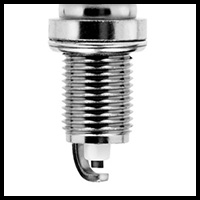
plug gapQ: I’d like to ask you guys a very simple question about spark plugs, or more specifically the gap setting between the electrodes?

You see, I’ve read many articles about peoples differing opinions on what gap to use and if you ask any motorcycle dealer they always regurgitate the same thing, “ use the manufacturers recommendation”, which is fine but a lot of people who race don’t seem to agree.

So what would you recommend for the plug gap on any general plug application, it’d be interesting to read your response?

Karl

A: I’ve a ‘fleet’ of motorcycles, ranging from old Suzuki’s (GS750, GSX1100), and various scooters, Gas Gas trial bike and a couple of pit bikes and I run the same gap on all of them, which isn’t necessarily what the ‘book’ says.

I prefer to set/gap them all to one millimeter or slightly below. Now that may sound a bit ‘wide’ to some but all my bikes perform well and, if I set my old Suzuki’s to the ‘normal’ 0.6 mill’ they tend to run too rich regarding plug colour.

Also, my mate Quintin Bergh builds VW Polo Cup race cars and has won five National titles with his cars that all run with our ‘one-mill’  theory, and so did my old Suzuki drag bike in the UK.

So try that out and see what happens? It won’t damage anything but if your bike/car/tank/bus develops a misfire reduce the gap, which it won’t. Don’t tell NGK though.

Bill


favicon4