news header 750

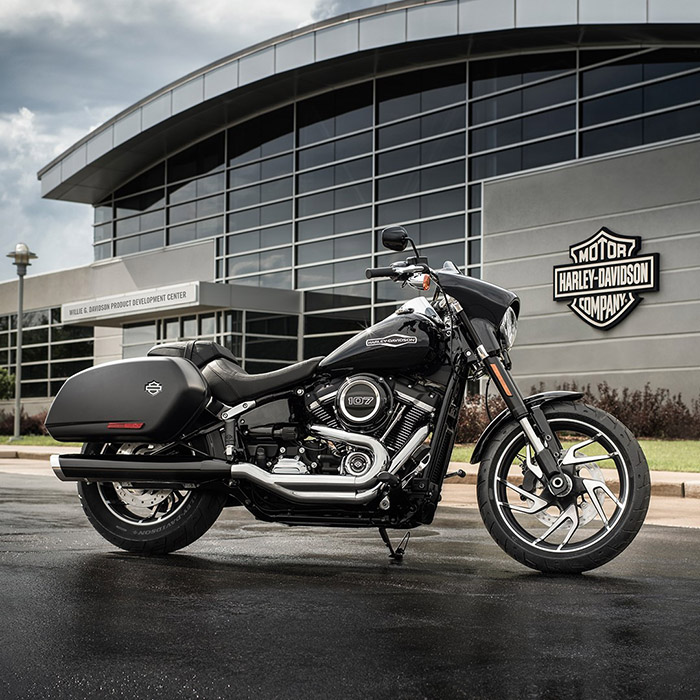
HD001New for 2018 the Sport Glide™ is the factory custom that can do it all – cruise, commute or tour. And while it draws classic styling cues from the Harley-Davidson Touring range the Sport Glide outlines a compact and contemporary form all of its own.

? Latest addition to the new Harley-Davidson Softail® range

? New 43mm inverted forks, plus remote hydraulic rear shock spring preload adjustment

? Powered by the Milwaukee-Eight 107 V-Twin engine

? Both fairing and panniers can be quickly and easily removed

? Full LED lighting and electronic cruise control

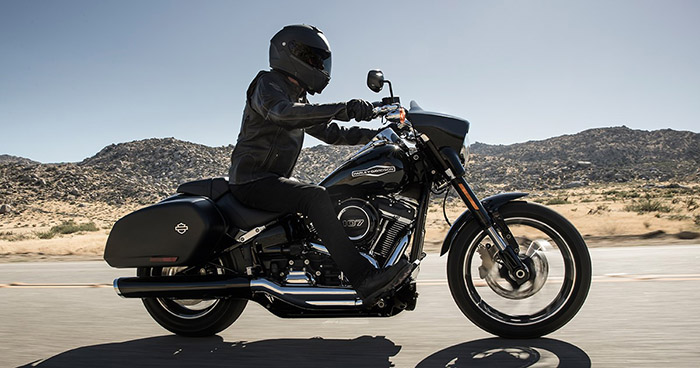
The new Harley-Davidson® Sport Glide™ is a quick-change artist, an aggressive factory-custom cruiser outfitted with a detachable fairing and panniers ideally suited for touring, cruising or commuting. The versatile Sport Glide slips stylishly through city streets and is equally ready for short or long-distance weekend runs.

The ninth model based on the all-new Harley-Davidson Softail® platform and the latest in a line of 100 high-impact motorcycles the company plans to introduce by 2027, the Sport Glide presents an engaging combination of technology and style.

Designed to be lightweight and stiff, the new Softail chassis underpinning the Sport Glide delivers agility and handling performance, while the rigid-mounted Milwaukee-Eight 107 V-Twin powertrain pumps out a mountain of torque for outstanding acceleration and passing power.

The Sport Glide will be available in three solid colors: Vivid Black, Twisted Cherry and Silver Fortune.

Dave Latz, Harley-Davidson Senior Product Planning Manager:

“The Sport Glide offers the thrilling dynamic capability of the new Softail platform with features that make it suited for both commuting and light touring. Its factory-custom design speaks to modern performance and contemporary style.”

Brad Richards, Harley-Davidson Vice President of Styling and Design:

“The Sport Glide presents the broad influence of Harley-Davidson design in a very contemporary way. In the new fairing, for example, you can see the influence of the iconic batwing fairing from Harley Touring models, but it’s been trimmed back to create a more compact, sporty shape. The

Sport Glide project offered us a unique opportunity to utilize a directional wheel, the first of its style to come out of the Harley-Davidson factory on a non-CVO model. The spokes sweep from the hub to the rim to create a sense of motion even when the Sport Glide is parked. The look of motion is reinforced with the shape of the fairing and the panniers, and even the slash-cut exhaust tips.”

The Sport Glide’s fairing is shaped to deflect wind away from the rider’s chest while leaving his or her head in a clean stream of air. It’s secured to the fork tubes with quick-release clamps, making removal or installation fast and easy. Riders seeking even more wind protection can exchange the standard 1.5-inch-high windshield for a 5.5-inch Light Smoke Windshield available from Harley-Davidson Genuine Motor Accessories.HD002

The new rigid (and lockable) panniers feature a sleek clamshell design. They’re easy to load and unload and can be opened with one hand by a seated rider; a damping device allows the lids to open smoothly. Also the bags can be removed in seconds with an internal quick-release mechanism, leaving behind barely visible mounting points. Combined pannier capacity is 1.9 cubic feet (25.5L).

Additional luggage capacity can be added with an accessory sissy bar upright, luggage rack or Tour-Pak mounting rack, each with the all-new HoldFast™ detachable latch system designed specifically for the new Softail platform. Like the Sport Glide panniers and fairing, HoldFast accessories can be installed or removed in seconds to strip the bike back down to its essential cruiser form.

A broad, supportive seat and forward-mounted foot controls contribute to a rider triangle designed to fit a broad range of sizes; seat height is set at just 652.7mm. The Daymaker LED headlamp is surrounded by a ring of LED signature lighting and complements the bright LED taillight (and LED rear indicators). A USB charging port, keyless ignition and the Harley-Davidson Smart Security System are standard features.

New 43mm inverted forks stiffen the front end and feature a single-cartridge damping system to for precise handling, stability and confident braking performance – which is further enhanced by standard ABS. The Sport Glide rolls on new Mantis cast-aluminum wheels, 18-inch front and 16-inch rear, shod with Michelin Scorcher 31 performance tyres.

The Sport Glide also features the all-new Softail monoshock rear suspension with remote hydraulic spring preload adjustment, controlled via an exposed knob below the right-side cover. It’s thus easy to accommodate the weight of luggage or passenger while maintaining optimal suspension performance and steering geometry.

The blacked-out Milwaukee-Eight 107 powertrain brings a new level of performance and sophistication to Harley-Davidson Big Twin cruisers, including the new Sport Glide. Dual counter-balancers are tuned to eliminate primary vibration at idle while permitting some engine character to reach the rider at speed. The engine is rigid-mounted in the frame, which stiffens the chassis and connects the rider more directly to the powertrain.

Precision oil cooling around the hottest areas of the cylinder heads further enhances rider and passenger comfort. The 2-1 exhaust, with sweeping rear header and black exhaust muffler contribute to the bike’s sporty style and enhance cornering clearance. Electronic throttle control enables standard electronic cruise control.

Riders craving even stronger road-legal Milwaukee-Eight performance for the Sport Glide can turn to Harley-Davidson Genuine Motor Parts + Accessories for Screamin’ Eagle Performance Stage Upgrades, from a Stage I Street Cannon muffler and uprated intake options all the way to a Stage IV upgrade that takes displacement to 114 cubic inches, and power through the roof!

For more information on the 2018 Harley-Davidson Sport Glide visit: www.h-d.com

end bike test


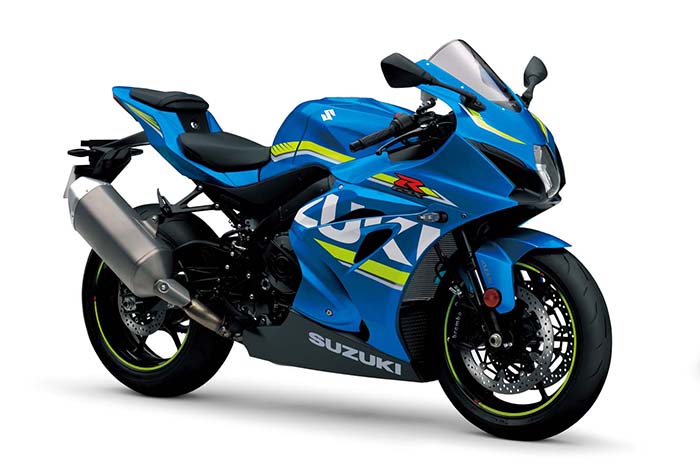
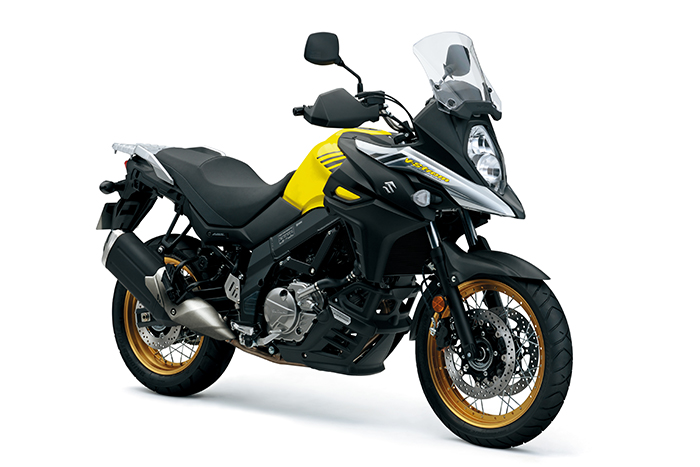
Suzuki picked up two awards at this year’s AutoTrader awards ceremony, with the new GSX-R1000R and new V-Strom 650 both celebrated.GSX-R1000AL7 YSF Diagonal-3

The all-new GSX-R1000R collected the accolade of best new sports bike for 2017. The new superbike boasts a plethora of MotoGP-derived technology, including a clever variable valve timing system that helps the GSX-R produce class-leading torque and a formidable mid-range, without sacrificing its top-end power.

It also gets a full suite of race-proven electronics, with an IMU monitoring all elements of the bike’s data to manage a 10-stage traction control system, launch control, and a system that prevents rear wheel lift under heavy braking. There’s also an up and down quickshifter and auto blipper, plus cornering ABS.DL650XAL7 YU1 Diagonal

Also new-for-2017, the V-Strom 650 was awarded best adventure/trail bike. The V-Strom gets traction control for 2017, plus more power and torque. For more information on the GSX-R1000R

http://suzukimotorcycle.co.zaend bike test


0001The curtains of the South African Cross-Country series (SACCS) closed in Glenharvie, Westonaria (Gauteng) this weekend. It was an imperfect end to a perfect season for the orange family, who have walked away with the overall championship.

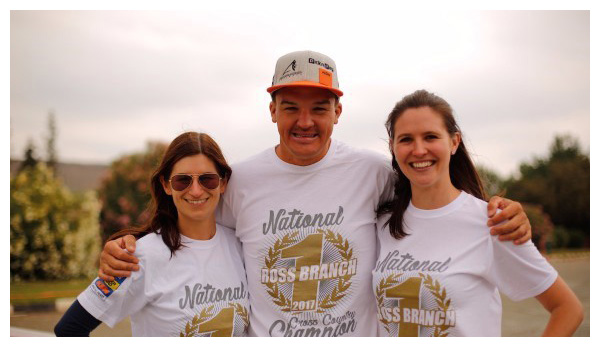
Reigning champion Ross Branch had nothing to lose after wrapping up the 2017 series in Harrismith, but set off to prove a point on Friday morning.

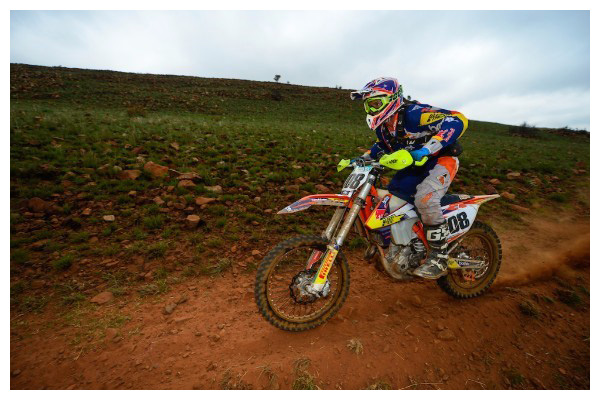
After a challenging 50km time trial, the Brother Leader Tread KTM rider had a bit of work to do in the main race as the third man off the startline. A rocky terrain was in store for the first 20km’s of the loop, which then merged into open farmlands.  

It was Kenneth Gilbert who raised his hand as the man to beat, and who set off with the clear intention of winning the event. Branch was up for the challenge and managed to narrow the gap on the first lap to slip into a slightly more comfortable second place.

By the final lap it was evident that Gilbert was going to come out on top, and he crossed the finish line to break Branch’s undefeated streak this season. Branch was all smiles as he took his helmet off, however, and admitted to thoroughly enjoying the intensity of the challenge:

“Kenny put the hammer down! I took some time off him, but to completely close the gap was almost impossible. It was an up and down day, but I had such a fantastic ride and really enjoyed the challenge onboard my KTM 450 XC-F,” he said.0002Branch was once again crowned the South African Overall and OR1 Cross Country champion for the second year running.

Reflecting on his successful season, he added, “It’s just been another incredible year of riding, a second championship means the world to me. The Brother Leader Tread KTM team deserves this number one plate as much as I do.”

OR1 teammate Louw Schmidt went to battle in the final event of the series. The rider has had a testing season after undergoing a repair for his collarbone… twice.

He was determined to make up for every opportunity he had missed, however, and commented before the race, “This season is not what it should have been. There’s nothing I can do about that though, and I’m just grateful to race today. I really want to finish on the podium.”

Schmidt achieved what he had set out to do, and fought his way up the ranks after qualifying in seventh to end the day in third in the OR1 class.

“It was all or nothing today and I really had to push my lines! I’m extremely happy to end the season like I did,” said Schmidt.

OR2 competitor Louwrens Mahoney was a first-time rider at Glenharvie. He entered the event with a lot at stake leading his class by a mere six points.

Despite Mahoney’s best efforts on his new KTM 350XC-F machine, he was overtaken by Brett Swanepoel in the race for the OR2 Championship.

Mahoney feels nothing but pride as he reflects on his Cross-Country season. The multiple off-road champion made a brilliant comeback after taking a short sabbatical last year, and will step into 2018 with a newly-found confidence.

“This final race was different from what I was used to! The terrain was very rocky so I couldn’t take that many chances. Well done to Brett for taking the OR2 Championship. I’m looking forward to next year, because I’m going to work on my fitness and give him a run for his money!” said Mahoney.

Multiple Senior National champion Juan ‘Bollie' van Rooyen had a similar fate to Branch. The rider has blazed his way through the season without a single loss to his name. Husqvarna’s Hentie Hanekom has been hot on his trail, however, and finally managed to get the upper hand in the final event of the series.

After a hard crash on the first lap, van Rooyen got back on his bike and calmly went about the business of winning the championship. Despite finishing in second place, he managed to end the season as he had hoped with the Senior Championship badge on his belt.0003“I took a knock after that crash in the first loop, but I’m proud to say that I managed to regroup and bring home the win,” said an elated van Rooyen.

Another reason for the Brother Leader Tread KTM team to celebrate is ending the Cross Country series with the added bonus of the Manufacturer’s Award.

“Being rewarded with the 2017 Manufacturer’s title in all three National Offroad motorcycle disciplines, that being Cross Country, Enduro, and Motocross, is something we are extremely proud of and is proof that our orange machines are made for endurance and tough conditions.

At the end of the day though, we are just the receiver of these awards, those that really deserve the recognition are all the KTM riders out there that put our brand on the map, may it be professional riders, privateers or weekend warriors. It’s them and their support structure who make it all worth it and I could not be prouder of the support we receive from our huge orange family out there.

That being said, we are extremely grateful to all our team sponsors who make it possible to race on such a professional level with such a great selection of champions and championship contenders. With the likes of Brother International, Leader Tread and Red Bull, just to name a few, we have won more titles over the years than any other manufacturer and we will continue to put in the hard work to bring home more silverware in the future,” said Franziska Brandl, Managing Director of KTM South Africa.end bike test


An epic battle for the Kingdom of Lesotho will unfold in just over two weeks. The annual Motul Roof of Africa will take place from 15-18 November.

This will be the 50th edition of the ‘Mother of Hard Enduros’, Africa’s largest and oldest offroad event, and it promises to be more exciting than ever.001All eyes will be on the international showdown between ROCKSTAR ENRGY HUSQVARNA FACTORY RACING’s Graham Jarvis and Red Bull KTM Factory Racing’s Alfredo Gomez. There is bound to be blood as the riders gear up to fight tooth and nail for the esteemed Roof of Africa title.

Gomez was somewhat controversially defeated by Jarvis at the 2016 event after a calculation error. Gomez thought he only had to finish with Jarvis to take the win and ended up losing the race by a mere 9 seconds on the final climb to the finish line. Lesotho’s heat and high altitude sets the stage for and epic showdown in search of vengeance.
 
Other international riders that cannot be left out of the mix is Andreas Lettenbichler (Red Bull KTM Factory Racing) and his son Manuel Lettenbichler (Brother Leader Tread KTM).

Competitive racing runs deep in the Lettenbichler genes, and the young ‘Lettie’ superstar has often been described to be the future of hard enduro.002Adding an extra international twist is Mario Roman. The Sherco Factory Racing rider placed second behind Jarvis in Red Bull Sea to Sky and Red Bull Romanics this year.
 
For the first time in the Roof of Africa’s history, there will also be an excitingbattle between the women riders who have been brave enough to sign up for the gold route. Brother Leader Tread KTM’s Kirsten Landman is the only woman to have ever finished the Gold class of the event.

While the local enduro hero usually executes a complete whitewash in her category, she will enjoy being presented with a challenge from another female rider for a change.003

The challenge will come from the 2016 FIM Women’s SuperEnduro World Cup winner, 2015 AMA EnduroCross Cup winner, 2014 Spanish Trials champion and multiple X Games medalist, Sandra Gomez riding for PEPSON PLASTICS HUSQVARNA RACING.
 
The Spaniard stepped onto the African continent for the first time last month. She flew in for the National Enduro season finale, and thoroughly enjoyed getting a taste of what Lesotho’s treacherous terrain is like.
 
A brutal local battle for the Roof of Africa title is also on the cards for this year’s event. After a tough setback this season, PEPSON PLASTICS HUSQVARNA RACING’s Brett Swanepoel will be itching to put on a proper show. He will be up against Brother Leader Tread KTM’s Travis Teasdale, who beat him to the National Enduro championship title recently, and his team mates Scott Bouverie and Dwayne Kleynhans.

A local dark horse that has the potential to cause an upset is Sherco Factory Racing’s Wade Young. The rider sent shock waves into the world of hard enduro in 2012 when he won the prestigious Roof of Africa as a 16-year old.
 
He missed out on the event last year because of an injury that he sustained at Red Bull Sea to Sky. He openly expressed how gutted he felt, and will be hungrier than ever to stake his claim at this year’s event.
 
A promising youngster that looks set to follow in Young’s footsteps in 16-year old Matthew Green (PEPSON PLASTICS HUSQVARNA RACING).
 
All eyes will be on Green after his recent performance in the National Enduro series, where he went on to win the High School Championship.

005Queen of the Mountains Kirsten Landman. Roof of Africa 2016. 

Credit:www.zcmc.co.zaend bike test


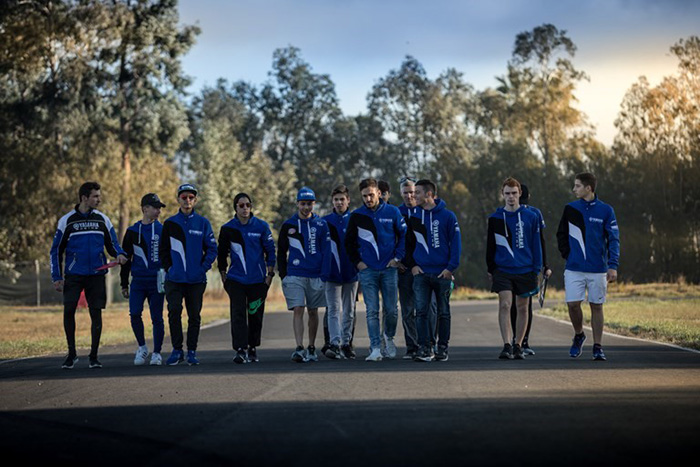
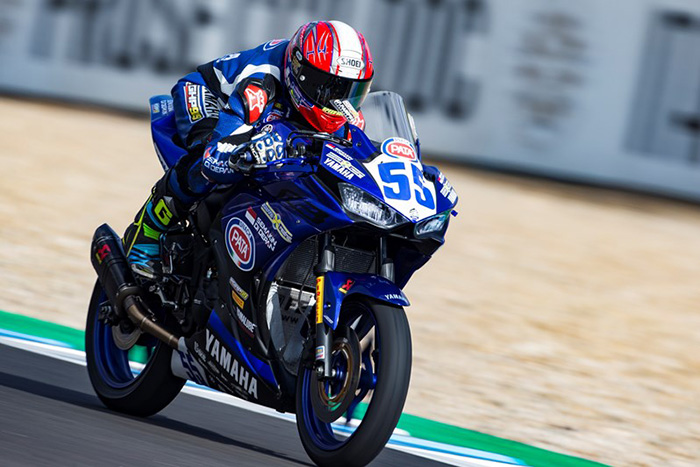
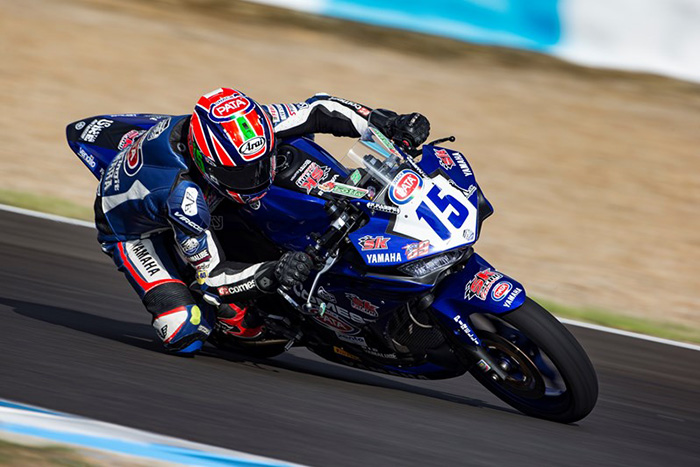
01The inaugural Yamaha R3 bLU cRU Masterclass saw 11 young riders given the chance to learn from their heroes as they attempted to secure a coveted slot in the 2018 Yamaha R3 bLU cRU Challenge, which sees six riders competing onboard Yamaha R3s in the WorldSSP300 Championship. Reigning Endurance World Champions, GMT94 Yamaha Official EWC Team's David Checa and Niccolò Canepa, along with GRT Yamaha Official WorldSSP Team's Federico Caricasulo, plus the winner of the inaugural Yamaha R3 bLU cRU Challenge and Vice WorldSSP300 Champion, Alfonso Coppola, were on hand to give advice and instruction to the young hopefuls, with the six winners to be announced on the 1st of November.

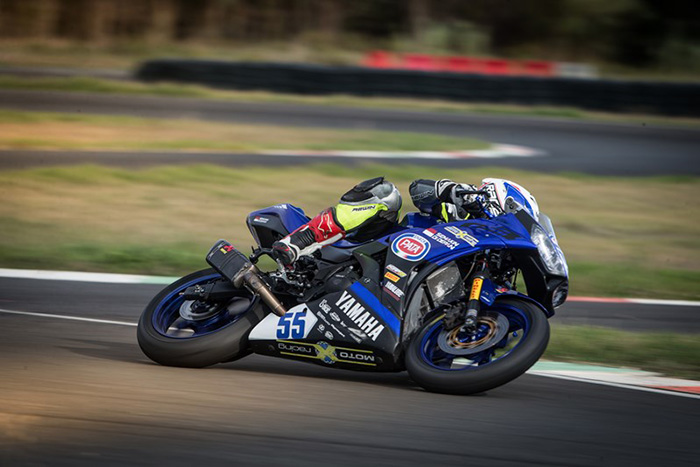
The Yamaha bLU cRU project is designed to identify, encourage, and develop the best young riding talent, providing a clear career path for them to fulfil their dreams on the world stage. Starting in 2015 for off-road riders, the road-racing side of the project began two years later with six riders selected to compete in the 2017 FIM Supersport 300 World Championship as a part of the Yamaha R3 bLU cRU Challenge. The first year of the project saw it deliver on its potential, with 20-year-old Italian Alfonso Coppola winning the challenge and just missing out on the overall championship by one point as all six bLU cRU riders - plus Indonesian wildcard and race winner Galang Hendra Pratama -  impressed throughout the season. The first ever Yamaha R3 Masterclass took place alongside the second edition of the Yamaha YZ125 Masterclass, featuring Yamaha MXGP legend Steven Frossard, that searches for the best young off-road riders to take part in the YZ125 bLU cRUCup, a project that has grown into the most successful feeder program into the European EMX125 Championship.

In Latina, Italy on the 26th-28th of October 2017 it was time to find the next crop of potential future road-racing world champions, with 11 young riders selected to take part in the first ever Yamaha R3 bLU cRU Masterclass at the Il Sagittario Circuit in an effort to secure their place as one of the six Yamaha bLU cRU riders in the 2018 WorldSSP Championship on board a Yamaha YZF-R3. These riders will benefit from the Yamaha R3 bLU cRU Challenge rider package, dedicated to supporting young riders in the international racing environment. This includes racing kit parts, a race service support at the track, a full paddock clothing kit and much more. The riders will participate in the Yamaha R3 bLU cRU Challenge within the championship, with the top rider at the end of the season moving up the racing pyramid with an official Yamaha supported ride in a higher class the following year.02

To ensure it was a truly once in a lifetime experience for the young riders, on hand to provide advice and guidance were the bLU cRU Ambassadors, GMT94 Yamaha's triple Endurance World Champion David Checa and his teammate who helped him lift the 2016/2017 title, former MotoGP rider Niccolò Canepa. They were joined by GRT Yamaha's WorldSSP rider Federico Caricasulo, fresh from his 'perfect' weekend in Jerez where he secured pole position, a new lap record, and took the race victory. Completing the mentor lineup was the 2017 Yamaha R3 bLU cRU Challenge winner, Alfonso Coppola, who could give first-hand advice to the young riders about what it is like to be a part of the bLU cRU project after an incredible season that saw him finish as runner-up in the WorldSSP300 Championship.

Over the two days, under the watchful eye of Yamaha Motor Europe's bLU cRU Racing Manager Alberto Barozzi, the bLU cRU Ambassadors and the MotoX Racing Team, these young riders were taught by the very best in the business and given a chance to impress in an effort to take the next step in their career. The 11 riders taking part in the Masterclass finished at the top of their respective 2017 National R3 Cup's with Luca Bernardi (16), Alessandro Arcangeli (16) and Giovanni Grianti (18) from Italy joined by Dutch riders Dennis Koopman (20), Kevin Mijwaart (18) and Joep Overbeeke (18), along with Hugo de Cancellis (16), Lucas Clement (19) and Alan Muel (19) from France, as well as Greek rider Notis Papapavlou (17) and Mihail Floroff (16) from Bulgaria.

Split into two groups, all 11 riders took full advantage of the Masterclass, not only spending the two days learning as much as they could from the bLU cRU Ambassadors on the Il Sagitarrio Circuit but also finding out what it takes away from the track to become a world-class rider. The Masterclass was designed to cover all aspects of motorcycle racing, on the first day the riders learnt everything from how to improve their riding styles and technical lessons about how best to set up their R3s, right the way through to how to mentally prepare for a race weekend and the best training exercises to do and nutrition advice to ensure they are at their physical peak.03

On the second day, they took part in a series of races, which saw the two groups participate in separate qualifying races, with the top three from each group going through to compete in the final. The winner was 16-year-old Italian Luca Bernardi, with 20-year-old Dutch rider Dennis Koopman in second and his compatriot, 18-year-old Joep Overbeeke, completing the podium but, as stressed by the bLU cRU Ambassadors, winning the races or setting the fastest lap time over the course of the two days would not be the deciding factor in being selected. They would also take into account the attitude of the riders, their ability to adapt and put into practice what they had learnt and the many other elements that contribute to making a world class rider.

After a memorable two days for the 11 young riders, they all left the Masterclass with heads held high after they thoroughly impressed the bLU cRU Ambassadors. Now they must wait until Wednesday the 1st of November when the Racing Committee of Yamaha Motor Europe will announce who will get to become an official Yamaha R3 bLU cRU Challenge rider in 2018. Yamaha would like to thank everyone that took part in the Masterclass for making it such a success, especially the MotoX Racing Team who provided first-class support throughout the two days to everyone involved.04end bike test


115626 2018 gl1800 goldwing 1800x1800Redesigned from the wheels up, the new Honda Gold Wing is sharper, more compact and lighter; its monumental flat six-cylinder engine now features 4-valves per cylinder and comes equipped with Throttle By Wire, 4 riding modes, Honda Selectable Torque Control and Hill Start Assist. The new chassis features an aluminum beam frame, double wishbone front suspension and single-sided Pro-Arm – damping is electrically adjustable, as is rear spring preload. An electric screen, Smart Key and Apple CarPlay are also standard equipment. An entirely new, third generation of Honda’s unique Dual Clutch Transmission - with seven speeds -  will also be available.

Contents:

1 Introduction

2 Model overview

3 Key features

1. Introduction

The Honda Gold Wing, since its introduction as a naked 1000cc machine in 1975 has always been the ultimate in two-wheeled travel. And it’s a motorcycle that’s been very much on its own journey, growing in physical size and displacement over the decades, all the while creating an enduring and unrivalled reputation for luxury, quality and comfort.

Now, in response to the evolutions of demographics and the motorcycle market, the development team in charge of the bike’s future have decided on a radical departure from what would be a traditional update trajectory.

So for 2018 the GL1800 Gold Wing takes a new direction and is brand new from the wheels-up. It still has an evocative, flat six-cylinder engine that delivers an avalanche of torque and power, and it still remains Honda’s flagship premium tourer, loaded with features that allow two people to ride in style. Yet it’s smaller, much lighter and much more agile – very much a true ‘rider’s motorcycle’.

And as a result the new Gold Wing’s appeal is broader, reaching out to a younger generation of motorcyclists that may have overlooked – or simply not been aware of – the previous design. As happy on an urban commute as it is the open road, the Gold Wing is now a bike for all reasons, rather than just one.

Mr Yutaka Nakanishi, Large Project Leader (LPL) 18YM GL1800 Gold Wing

“We wanted our new Gold Wing to maintain its luxury but to be a much more ‘rounded’ motorcycle. A machine as useful to its owner around the city as it is out on tour. And more exciting to ride than ever. So we started from a blank piece of paper and made the Gold Wing sharper and lighter, and added all the technological hardware and software the modern rider could wish for. Now, just as in 1975, it remains a flagship model for Honda – and we are very proud to start this new chapter for such an important name.”2018-Honda-Gold-Wing-First-Look-Fast-Facts-6
2. Model Overview

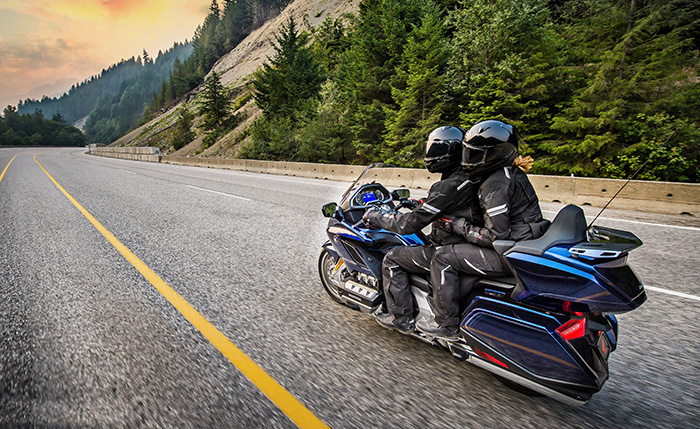
Sharing a common engine and chassis platform, the new ‘Wing will be available as the base model GL1800 Gold Wing, and as a ‘Tour’ edition with top box, which will also offer a version equipped with DCT and air bag. Depending on the variant, up to 48kg has been saved compared to the previous model.

The engine and chassis have been designed together, to move the riding position forward and create a much more compact motorcycle. The aluminium beam frame is constructed around the link front fork, which allows the engine to come further forward - as the front wheel moves up and down in a more vertical plane - while providing high-quality suspension control and front-end stability thanks to its stiffness and reduced friction. Suspension damping can also be adjusted electrically.

Optimised for size, the new flat six-cylinder engine has lost none of its power, torque and addictive delivery. Throttle By Wire has been added, with 4 rider modes; TOUR, SPORT, ECON and RAIN. Honda Selectable Torque Control (HSTC) maintains rear wheel traction while the suspension damping and Combined Brake System (CBS) alter depending on mode selected. Hill Start Assist (HSA) and Idling Stop add ease of use and improve fuel efficiency.

The manual transmission is now 6-speed, while the new Dual Clutch Transmission (DCT) features 7-speeds, with clutch feel, shift speed and rpm range of up/downshifts tailored specifically to each riding mode. It also features a creep forward and back function. The manual machine employs the same reverse system as the previous design.

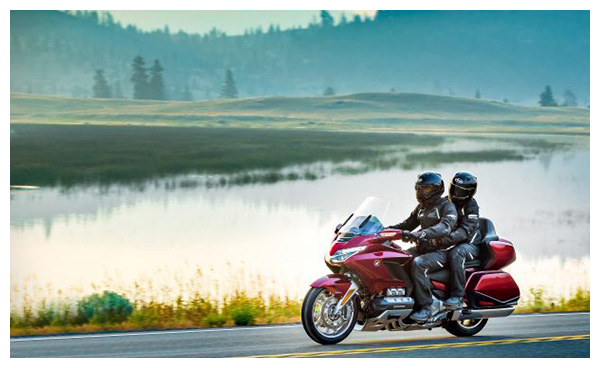
Above all, a totally new sense of freedom can be found on the 2018 Gold Wing, with a step change in sheer riding enjoyment. The performance improvement is  matched by even greater levels of relaxation: the stylish, aerodynamically-efficient fairing channels air around the rider and the electric screen adjusts for preference;  the seats provide all-day comfort. New features like the smart key system, Apple CarPlay and Bluetooth connectivity bring even more convenience.

And much thought went into the Gold Wing’s paint finish. The upper bodywork features deeper tone colour, with thick clear-coat complemented by seats finished in high-quality, high-grain materials. The lower body is highlighted with vivid textures that make a strong visual statement.

Colour options available:

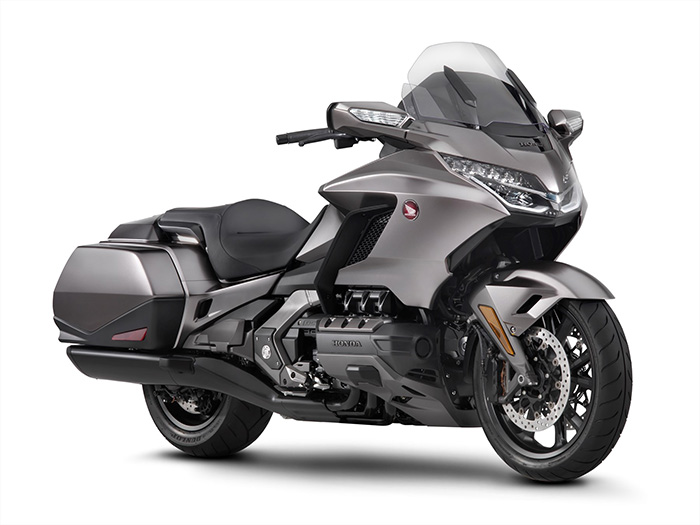
GL1800 Gold Wing – Matte Majestic Silver.

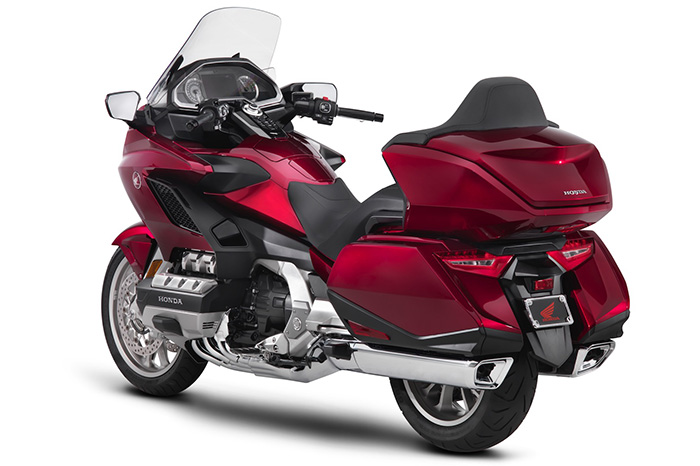
GL1800 Gold Wing ‘Tour’ – Candy Ardent Red and Pearl Glare White

GL1800 Gold Wing ‘Tour’ with DCT & air bag– Candy Ardent Red/Darkness Black and Darkness Black metallic115826 2018 gl1800 goldwing tour 1800x1800
3. Key Features

3.1 Styling & Equipment

Taut lines with a contemporary edge show off the motorcycle underneath

Comfort, heat management and air management vastly improved

Electric windscreen adjustable for angle and height

Cruise control operates smoothly via Throttle By Wire (TBW)

Ample luggage capacity for touring, and top box still takes 2 full-face helmets

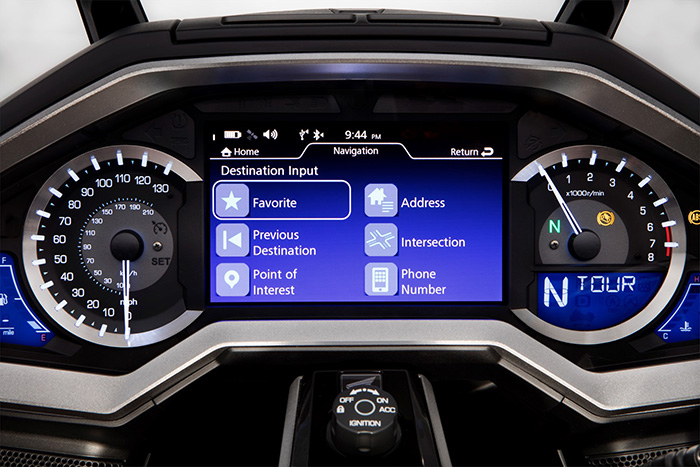
7-inch TFT display provides navigation and audio information

Apple CarPlay allows iPhone users to use their device

Full LED lighting and auto-cancelling indicators

Smart key control adds convenience for ignition and luggage

The previous Gold Wing featured an expansive design and attitude. The new Gold Wing is a completely different proposition and replaces the relaxed lines of the outgoing model with a more honed, athletic ethos. Key words the Honda team used during development were ‘Refined Shape, Taut Styling’.

It presents a unique silhouette and counterpoints comfort with the dynamic abilities of chassis and engine, adding the traditional Gold Wing premium level of fit, finish and materials. The new ‘face’ is daringly forward-slanting; combined with the compact fairing proportions, it presents an energetic frontal signature.

The key line of the body, stretching front to back, highlights the differing upper and lower bodywork functions while clearly showcasing the reduced overall size of the machine. A central element is the fairing, with its sharp and solid flat surfaces, and its nuanced aerodynamic detailing. It adds a tension that hints at the performance on offer.

Also on display is the motorcycle itself – the double wishbone front suspension, flat six-cylinder engine, exhausts – in all their functional beauty. Drawn together the design elements create cutting edge style, underpinned by incredible levels of engineering and electronics

It may be smaller and tauter in design, with a strong focus on the new aesthetics, but the development team responsible also had comfort, heat management and, most importantly, air management high on their agenda.

The previous bike’s large fairing was designed to provide a pocket of still air behind it; the new approach is to channel airflow around the rider and pillion, effectively providing a pleasant cooling breeze. The reduced aerodynamic drag has also helped improve fuel efficiency.

Gone too is the large windscreen; in its place a smaller electric screen, operated from the left handlebar. It provides excellent wind protection (with the rider and pillion closer to it than before) yet at the same time a sense of space and freedom when required. Screen angle and height adjustment is step-less. Available as options are a larger screen, a fully-adjustable deflector for the arms and upper body and fixed deflectors for the lower legs and feet.

From a seating perspective rider and pillion are separated, much like the old model  – the rider can enjoy riding the bike, while the pillion can sit back and enjoy the ride. The rider’s seat shape is comfortable and supportive while allowing movement – to enjoy the Gold Wing’s new dynamic – and easy ground reach.102617-Top-10-Facts-About-The-2018-Honda-Gold-Wing-8
All lighting is LED. The lower portion of the headlights use 5 polished optical lenses on both sides to create a Jewel-Eye low beam light signature. Using high beam (in the upper portion) creates a stereoscopic impression. The front indicators are housed in the mirrors and the indicators also auto-cancel; the system compares front and rear wheel speed difference and calculates when to cancel the indication relative to the riding situation.

The new Gold Wing’s cruise control too has evolved; the speed that’s been set with the cruise control switch (located on the right handlebar) is now shown in the bottom left area of the speedometer.

Also, through TBW the system has achieved a smoother transition to the specified speed and a much smoother operation, especially when going uphill. In the case of the manual transmission models squeezing the clutch or brake, or twisting the throttle cancels cruise control. For the DCT variant (in AT mode) after completing the deceleration with the cruise control system in operation ­– and resuming the previous speed – the Gold Wing returns to the preset with an appropriate shifting schedule.

Before designing the luggage Honda took out research to see just how owners were using their Gold Wings. And that intelligence led to the decision to reduce the total luggage volume as most were ridden for shorter, 2-3 day tours, with no need to carry larger amounts.

The rear top box of the ‘Tour’ versions will hold 2 full-face helmets; combined with the panniers 110L storage capacity is available. Opening is via a button or smart key. Available as options are a luggage rack for the top box and exclusively designed inner bags.

Capacity of the fuel tank is 4 litres less at 21 litres. But as the new Gold Wing is so much lighter and more aerodynamic, improved fuel economy of 5.6 litres/100km means tank range is at the same level as the previous design.

Luxurious instrumentation creates a unique cockpit. Different low-contrast colours with dark tones are applied to the dials, of which the peripheral areas form cone-shaped slopes to create a feeling of depth. A ring with a metal texture surrounds each dial, and the graduations glow in LED, giving concrete depth and a calm, cool image.

The 7-inch full-color TFT liquid crystal display screen provides infotainment-related information (for the audio and navigation systems) as well as managing the HSTC and suspension adjustment. Information is displayed in differentiated segments in a very functional order, so the rider can get all the relevant data with the minimum of eye movement.

Brightness adjusts automatically (with the maximum luminous intensity of the screen being 1000 cd) and the rider can also choose from 8 brightness levels. Tyre pressure is displayed as a numerical figure in the bottom left area of the instruments.

Pride of place – on the centre console and smart key – is the new Gold Wing emblem. Its crisp 3D, two-tone chrome design merges the strength and dignity of a lion’s head with the majestic wings of an eagle ready to pounce with open talons. It activates all the motorcycle’s systems and also incorporates the emergency key. The ignition and handlebar lock can be turned on or off while just carrying the smart key.

Operation of the luggage is simplified. With the smart key present a push button opens the panniers and top box. It is also possible to temporarily unlock the luggage via remote control; the unlock button on the smart key enables the passenger to instantly access the saddlebags and the rear luggage box. Hydraulic dampers smooth the opening and closing. Pushing and holding the call button results in the indicators flashing.

The Gold Wing is now compatible with Apple CarPlay, so the rider can utilise the personalised information and content inside their iPhone, such as telephone numbers and music playlists. Bluetooth connectivity has been adopted and a USB cable can also be plugged in.

Just as the new Gold Wing is lighter and more compact, its high-output audio amplifier system too has evolved. Lightweight speakers are sited to work with the new riding position and achieve a sound quality with vivid presence. A passenger audio control switch is available to ensure an even more pleasant riding experience; the switches are located on the upper part of the right pannier and adjusting the volume, switching the source and fast forwarding is possible.

The navigation system is displayed on the 7-inch full-color TFT liquid crystal display screen in the central area of the instruments and now includes a gyrocompass, which means guidance is continued even inside a tunnel. Cancellation of any waypoint or ‘go home’ instruction operation while riding is now possible.102417-2018-Honda-Gold-Wing-Unveil-13-633x388
3.2 Chassis

Total weight saving of 48kg compared to the previous model

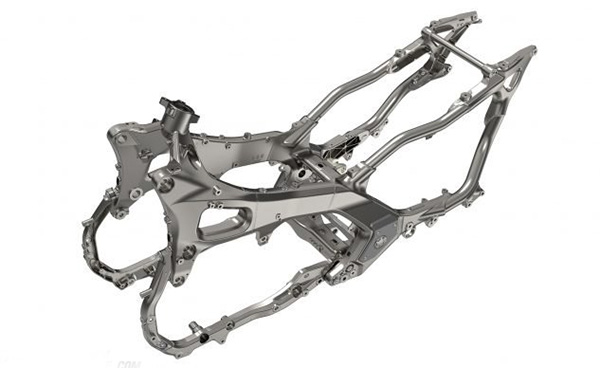
Brand new aluminium beam frame moves the engine and rider forward

Double wishbone front suspension and redesigned Pro-Arm

Front and rear damping level adjusts to suit riding mode selected

Rear spring preload electrically adjustable

ABS and Dual-Combined Braking System (D-CBS)

The new Gold Wing’s die-cast aluminium twin beam frame is designed to package the (now much more compact) engine in a tighter space, 40mm further forward. Its structural thickness has been optimised in each area to deliver a smooth and stable ride, from walking speed upwards, whether on tight city streets or out on the open road. The frame and swingarm together are 2kg lighter than the previous design.

The riding position for rider and pillion is now 36mm forward, and thanks to the dynamic of the double wishbone front suspension (and the angles the double wishbones are set at) the back of the front tyre under full suspension compression is 24mm forward.

Another benefit of the double wishbone front suspension is the reduction in sliding friction (from bump deflections and steering input) that a standard telescopic fork creates as the stanchions travel up and down in the fork leg; the new Gold Wing front end is 30% smoother. Bearings are used in all shaft bush areas for steering and suspension stroke, further reducing friction.

The steering input – via the dual fork holders – is also separated from the suspension provided by the single shock absorber and the Gold Wing’s yaw moment is now 40% less, making it nimbler and easier to steer. In addition, a patented steering cross tie-rod connects the handlebars to the front axle and the position of the handlebar pivot with less mass around it (plus siting of the handlebars) delivers an entirely natural feel to the rider.

The Dual Combined Brake System (D-CBS) optimally distributes braking force to the front and rear wheels. Whereas the ABS was operated by 2 motors on the previous model, both have been replaced by one smaller and lighter circulation type ABS modulator which has been integrated with the brake ECU, resulting in a 1.3kg weight saving for the braking system. It also operates in linkage with the current Riding Mode of choice, automatically adjusting the braking characteristics to the riding situation, enhancing security. Dual 320mm front discs are gripped by 6 piston calipers, the rear 316mm disc by a 3-piston caliper.

A first for Honda is the Gold Wing’s new Pro-Arm; the old design used tapered bearings plus pivot point plates of the necessary thickness to provide correct rigidity. The new Pro-Arm design uses a redesigned (patent-pending) pivot shaft structure and attaches to the frame on its left side. The right side serves as a maintenance access.

This has changed the stress and forces on the frame’s swingarm pivot plates, allowing much greater freedom of design and making the machine easier to manage; it also contributes to stability. Pro-Link provides progressive suspension action and comfort – the link plates have been optimised and spherical joints are used throughout, cancelling out torsion.

Damping level is also adjusted electrically relative to the riding mode selected by the rider. Stepper motors housed within the front and rear shock absorbers move needles to control oil flow, tailoring damping force for the riding situation.

Rear spring preload is also now electrically adjusted. It’s an intuitive – rather than numerical – system. Separate from the 4 riding modes, there are 4 settings of preload relative to load from soft to hard: single rider; rider with luggage; rider with pillion, and rider with pillion fully loaded with luggage. The setting is displayed on the TFT screen and adjusted via switch.

Rake and trail are set at 30.5°/109mm, with wheelbase of 1695mm. The previous Gold Wing weighed 413kg wet; the new Gold Wing weighs 365kg wet. The Gold Wing Tour weighs 379kg wet and the DCT and airbox version weighs 383kg wet.115618 2018 gl1800 goldwing 1800x1800

3.3 Engine

Extensively revised flat six-cylinder engine 6.2kg lighter, with 4 valves per cylinder

Throttle By Wire (TBW) adds 4 rider modes to tailor power output

The rider modes also manage HSTC, suspension damping and brake force

Idling Stop and Integrated Starter Generator (ISG) on DCT version

Hill Start Assist (HSA)

6-speed manual gearbox with assist/slipper clutch

Core to the previous Gold Wing’s appeal was its turbine-smooth flat six-cylinder engine, which produced torque from low rpm with a distinctive power delivery and feel that quickly became addictive.

To realise the handling ambitions of the new chassis the 1,833cc engine too has been redrawn. Still as a horizontally-opposed flat six, but now with four valves per cylinder rather than two, much more compact in size and 6.2kg lighter.

Peak power of 93kW arrives @ 5,500rpm, with peak torque of 170Nm delivered @ 4,500rpm. The bore size of 73mm (from 74mm) has been optimised to stroke of 73mm and bore pitch shortened 9mm; the left and right cylinders are offset 4mm and the cylinder sleeves are now aluminium. Compression ratio is set at 10.5:1.

The Unicam cylinder heads – the inlet valves are operated by finger-follower rocker arm, the exhaust valves by roller rocker arms – also employ a co-axial rocker-arm shaft for both inlet and exhaust, doing away with the old model’s valve lifter structure.

The combustion chambers are now a 4-valve ‘pentroof’ design (rather than a 2-valve ‘bathtub’) with the inlet ports designed to promote ‘tumble’ flows inside the cylinders thus improving efficiency. The piston skirts wear a molybdenum coating to reduce friction.

A stiffer crankshaft, constructed from SCM440H steel, allows a pin offset of -4mm and compared to the previous design the new engine is 33.5mm shorter in length. The crank sensor (which detects engine speed and piston position for EFI and ignition) has been moved from the front of the engine to the rear, reducing the distance between the front cover and crankshaft by 7mm.

The addition of Throttle By Wire (TBW) has brought with it 4 rider modes to alter the engine’s character and power delivery, linked to Honda Selectable Torque Control (HSTC), suspension damping and the Dual Combined Brake System (D-CBS).

TOUR mode is the base setting for comfort and power. It gives a direct 100% opening ratio between throttle grip and throttle body butterfly, with ‘default’ damping and front/rear brake force distribution.

SPORT serves up the highest throttle to butterfly ratio and delivers strong acceleration, with firmer damping and rear brake lever pressure.

ECON mode offers maximum fuel economy and easy cruising, with lower throttle to butterfly ratio and default damping and brake force.

RAIN turns the dial down to suit wet and slippery conditions, with lowest throttle to butterfly  ratio, default braking force distribution and soft suspension damping.

In all 4 riding modes HSTC constantly allows controllable acceleration in slippery conditions.

A single throttle body has replaced the dual throttle bodies of the previous design, with revisions to the diameter and thickness of the intake manifold to save weight. Intake manifold volume, from the throttle valve to intake valve has been reduced by approximately 10%, speeding up airflow and improving response.

There are two air intake ducts sited front left and right rear. This structure generates swirling as the air is drawn in – the result is more effective use of the air filter’s entire surface area and reduction in resistance. The internal shaping of both ducts has been optimised to align with the intake pulses of the engine’s low-rpm range, improving response and torque from smaller throttle openings.

The sound and feel of the Gold Wing’s engine has always been its calling card. While the new dual exhausts maintain the internal structure of the old model – 2 internal chambers plus a resonance chamber – the glass wool has been removed to save weight.

To complement the engine’s deep bass signature the exhausts now emit a powerful throb, without excessive noise. The cross-sectional areas of the exhaust pipes have been reduced 20% for two out of the six cylinders, bringing about the change in sound volume and depth.

The ISG (Integrated Starter Generator) combines the generator and starter motor into one component, with the generator effectively becoming the starter motor when supplied with reverse power.

The damper used for the coupling joint that transmits the driving force from both the ISG side and the crankshaft side has been changed from the viscous type used for the generator of the previous model to the mechanical, using an arc spring and rubber; weight is reduced by approximately 2.4 kg for the system as a whole. Helical gears are employed for the ISG driving gears, reducing the mechanical noise of the engine.

Key characteristics of the Idling Stop system are the ultra-quiet start-up of the engine thanks to the use of ISG, and the smooth starting feeling achieved through a combination of DCT and TBW control. When stopping at a traffic light with the Idling Stop system on, the engine automatically stops after 3 seconds and, when restarting, the rider only needs to turn the throttle, which immediately starts the engine.

The system is controlled so that hydraulic oil pressure is applied in advance to the DCT line that activates the clutch when the engine starts, so the time lag from  when the rider opens the throttle to movement is reduced. To curb any abruptness the TBW makes the throttle butterfly open gradually following the throttle opening – thus the smooth acceleration befitting of a Gold Wing. Idling Stop can be turned ON or OFF from the right handlebar switch.

Hill starts on a conventional motorcycle often involve simultaneously releasing the brakes, opening the throttle and engaging the clutch according to the grade of the slope. To ease this effort, the new Gold Wing has adopted Hill Start Assist (HSA) on both its Manual and DCT versions.

After stopping on a slope, further squeezing the brake lever quickly results in the ABS modulator generating hydraulic pressure for the rear brake caliper. When setting off – even when the brake lever is released – the hydraulic pressure temporarily retains braking force (for about 3 seconds) so starting on the uphill slope with the throttle is possible. When in operation, the HSA indicator is switched on to inform the rider.

The new 6-speed manual gearbox lowers the engine speed when cruising at 100km/h, compared to the previous 5-speed design. It’s also fitted with a ‘cam damper’ between the clutch and transmission, separating each inertial mass, reducing noise and improving shift quality/durability.

A cam assist and slipper clutch (with fewer discs and reduced hydraulic friction in the release mechanism) has replaced the hydraulic assist clutch. This has reduced clutch load at the lever by 20% and also smoothed downshifts; the slipper mechanism also contributes to the high-quality downshift feel. The reverse mechanism is exactly as it was on the previous Gold Wing.102417-2018-Honda-Gold-Wing-Unveil-15-633x388
3.4. Dual Clutch Transmission (DCT)

Third-generation DCT with 7-speeds

Smoother, quieter with faster upshifts and downshifts

Walking mode allows machine to ‘creep’ forward or back

The 4 riding modes also manage DCT for optimised response

Honda’s unique Dual Clutch Transmission is a natural fit for the new Gold Wing engine and development revolved around DCT as the base. This is the third all-new generation of the system and the first to have 7-speeds, specifically designed for long-distance cruising; it’s also extremely smooth and fast shifting. And lighter than the 5-speed manual transmission fitted to the previous design.

DCT delivers consistent, seamless gear changes up or down and very quickly becomes second nature in use. It uses two clutches: one for start-up and 1st, 3rd , 5th and 7th gears: the other for 2nd, 4th and 6th, with the mainshaft for each clutch located inside the other for compact packaging.

Each clutch is independently controlled by its own electro-hydraulic circuit. When a gear change occurs, the system pre-selects the target gear using the clutch not currently in use. The first clutch is then electronically disengaged as, simultaneously, the second clutch engages.

The result is a consistent, fast and seamless gear change. Furthermore, as the twin clutches transfer drive from one gear to the next with minimal interruption of the drive to the rear wheel, any gear change shock and pitching of the machine is minimised, making the change feel direct as well as smooth. Extra benefits include durability (as the gears cannot be damaged by missing a gear) impossibility of stalling, low stress urban riding and reduced rider fatigue.

In the lower speed range of the new Gold Wing’s DCT system, the ratios are close, reducing shift-shock and in the higher speed range set wider apart to reduce engine rpm. In both speed ranges comfort is improved as shifting up or down is of the highest quality.

Shift noise and shock have been addressed throughout the development of the third generation of DCT. Noise damper rubbers on both ends of the fork guide and the master arm greatly reduce any impact sound during gear changes.

A spring damper has been installed between the clutch and the main shaft in order to absorb the torque in the rotational direction, thus reducing the noise and shock of the contact between the clutch and main shaft when shifting gears. ?

The new Gold Wing’s DCT features a 1.8km/h forward Walking Mode with reverse of 1.2km/h, operated instantly from a +/- switch on the left handlebar.

Of the main shafts with a double tube structure, the outer main shaft connected with the even-number gears is linked to the inner shaft with a chain, by way of the gears on the counter shaft. This structure gives outer main shaft the role of the reverse idle shaft, which has resulted in a lightweight reverse mechanism with a compact structure - with no need for any reverse idle shaft.

When activating Walking Mode the two clutches of DCT are utilised to enable moving backward with clutch #1 and moving forward with clutch #2. In this way, moving forward or backward at walking speed is now possible with only clutch control, without any need for gear shifting. Furthermore, the throttle-by-wire system controls speed by minutely controlling the clutch capacity, while maintaining a certain engine speed, assuring controllability with a sense of security in wide-ranging situations.?

The 4 riding modes are interleaved with DCT. All share the same engine character, delivery and suspension settings as the MT model but add extra DCT-specific parameters. TOUR uses the default setting for smooth clutch engagement and gearshifts in AT mode, with a low-to-high rpm range for gear shifts. SPORT deploys a more direct clutch engagement, with gear shifts programmed in a mid-to-high rev range.

ECON has a soft clutch engagement, with low-to-mid rpm gear hold and default shifting feel. RAIN also operates a soft clutch, low-to-high rpm gear hold range and slower shifting in AT mode.18-honda-gold-wing lifestyle image 111end bike test

MOTOBOTAbout the booth
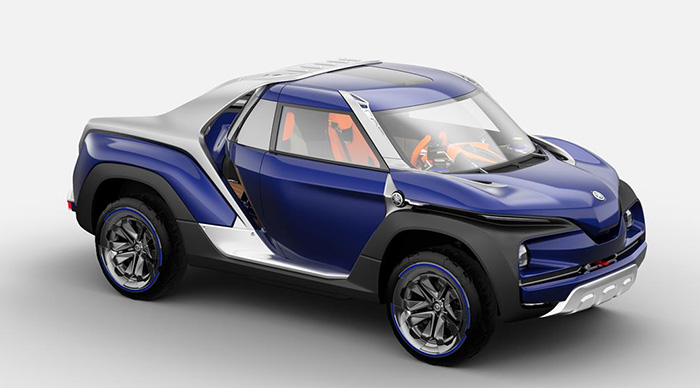
The theme of the Yamaha Motor booth for the 45th Tokyo Motor Show 2017 is "Yamaha Future Garage: Resonate the Future." The booth will display a 20-model array of concept and production models, including six world premiere models and four Japan premiere models.

At the booth this time, visitors will see Yamaha's "ever-growing world of personal mobility" brought forth by our exclusive Jin-Ki Kanno development ideal through displays of electrically power-assisted bicycles, scooters, motorcycles, Leaning Multi-Wheelers (LMW) and an automobile, as well as technical exhibits like an experimental proof-of-concept model for new forms of personal mobility in which the rider resonates harmoniously with the machine, and an autonomous motorcycle-riding humanoid robot that brings together Yamaha's motorcycle and robotics technology.

The creative booth design employs the image of a garage in which people and products, mobility and musical instruments resonate together to connect the present to the future. We hope you will enjoy the timeless resonation of the "ever-growing world of personal mobility" unique to the Yamaha brand.

Main Display ModelsMOTOROiD

MOTOROiD (Reference vehicle? 
In order to create new experiences of 
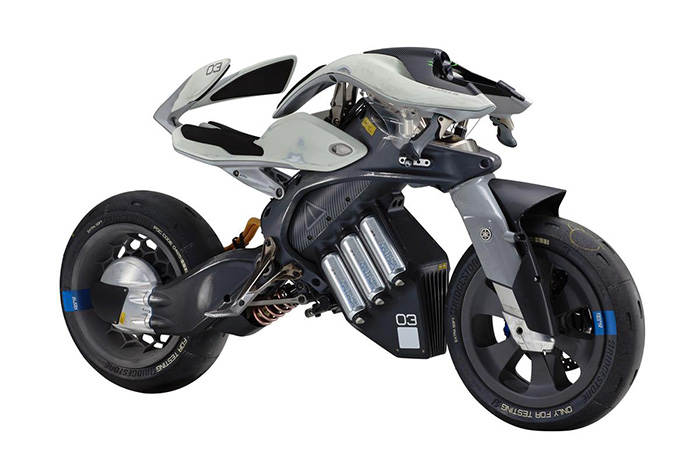
Kando,*this experimental proof-of-concept model employs artificial intelligence and explores creating new forms of personal mobility in which the rider resonates harmoniously with the machine. MOTOROiD's development concept was an "Unleashed Prototype," and it is capable of recognizing its owner and interacting in other capacities like a living creature. By undertaking these kinds of development challenges, Yamaha is aiming to acquire technology for creating new value for our customers. 
*Kando is a Japanese word for the simultaneous feelings of deep satisfaction and intense excitement that we experience when we encounter something of exceptional value.

Length x Width x Height = 2,060 mm x 600 mm x 1,090 mm 
Motor type = Rear - wheel hub motor 
Fuel supply system = Lithium - ion 
Vehicle weight (wet) = 213kg

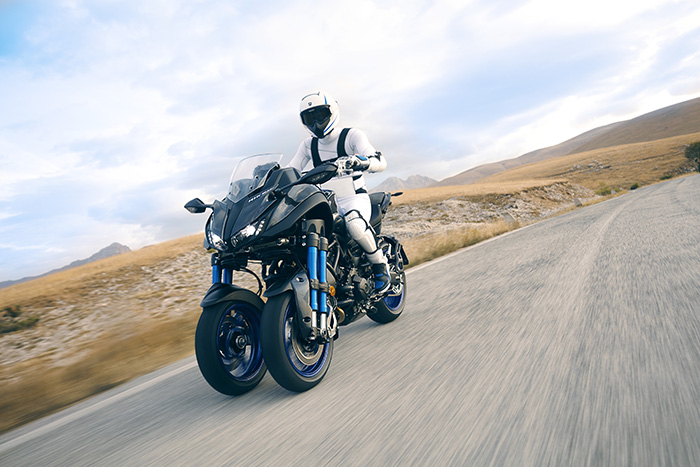
NIKEN (Reference vehicle? 
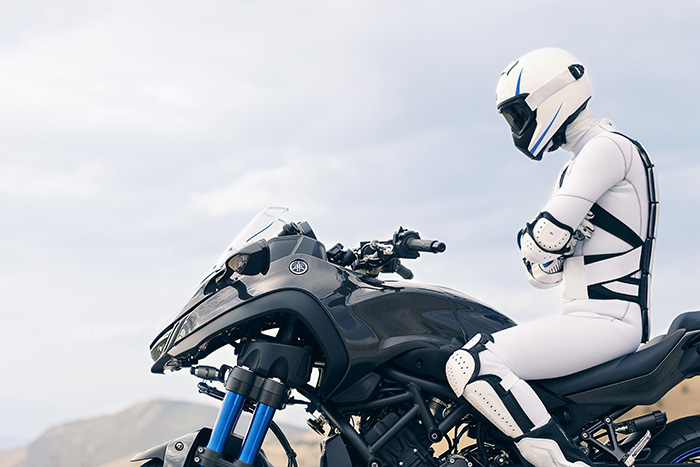
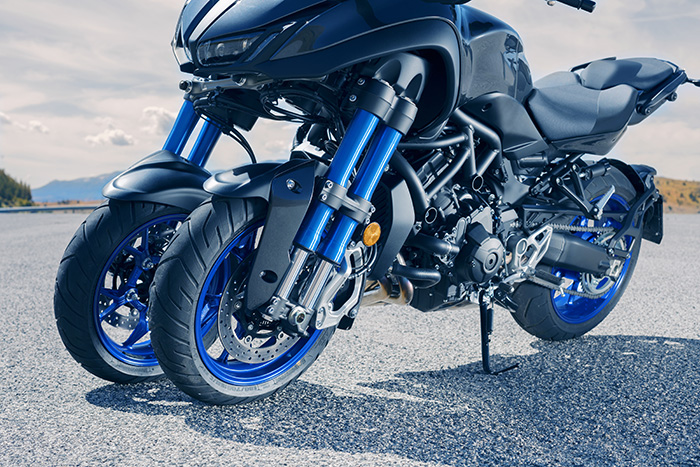
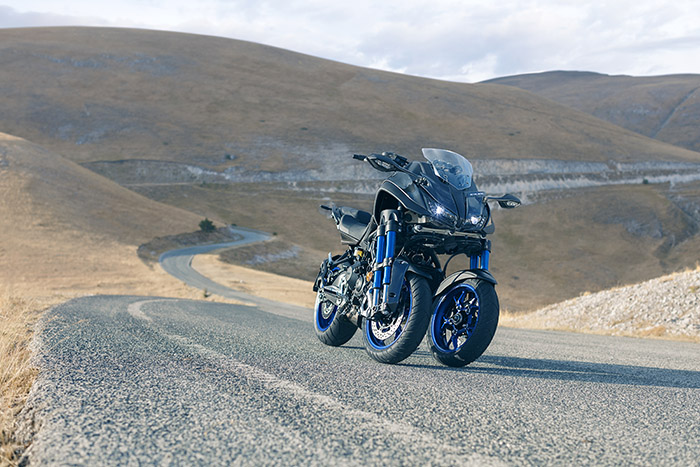
This large-displacement Leaning Multi-Wheeler (LMW) is powered by a liquid-cooled in-line 3-cylinder engine. This model is equipped with LMW technology to reduce the effects of changing ride environments and to deliver a high feeling of stability when cornering. It achieves excellent performance for spirited and sporty riding on various road surfaces and the capability to freely carve through the continuous corners of winding roads. The body design makes full use of the unprecedented front-end suspension mechanisms pairing 15-inch front wheels with dual-tube upside-down forks to visually accentuate the machine's sporty performance and create a high-quality look and feel at the same time. New Yamaha Niken. Ride the Revolution.

Length x Width x Height = 2,150 mm x 885 mm x 1,250 mm 
Engine type = Liquid-cooled 4-stroke, DOHC, 4-valve 
Cylinder arrangement = In-line 3-cylinder 
Fuel supply system = Fuel injectionTRITOWN55422

TRITOWN (Reference vehicle? 
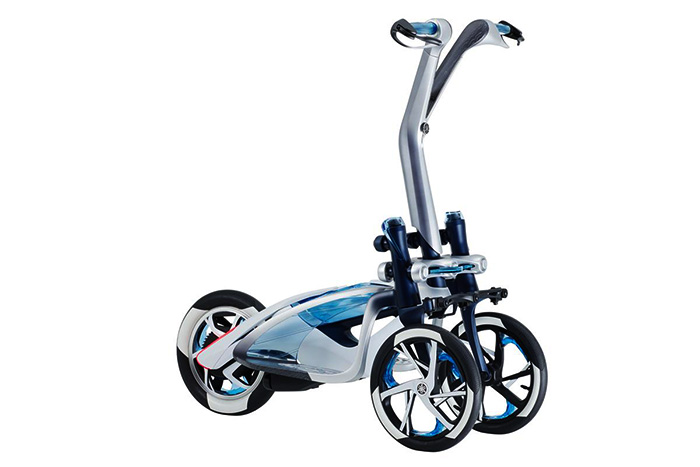
This compact electric vehicle with twin front wheels utilizes Yamaha's Leaning Multi-Wheel (LMW) mechanism and is ridden standing up. It has a simple structure where the rider uses their balance to control it and makes last-mile mobility a fun and exciting experience. Its light, compact body and ease of operation make it an attractive tool for short-range mobility for a wide range of people, and it can also be kept upright at a stop with the rider on board.

Length x Width x Height = 1,100 mm x 600 mm x 1,130 mm 
Motor type = Rear-wheel hub motorMWC 4

MWC?4 (Reference vehicle? 
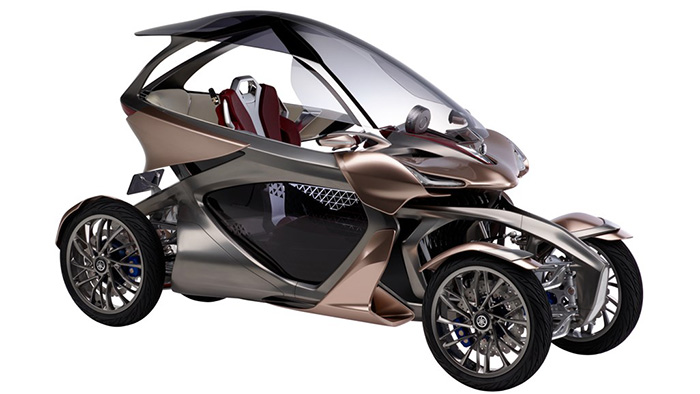
Looking to expand upon the possibilities for personal mobility stemming from motorcycles, this Leaning Multi-Wheel (LMW) vehicle has two wheels front and rear and was developed under the concept of "Half-Sized Mobility." The MWC-4 is powered by electric motors and a gasoline engine for range-extending power generation, and uses attitude-control technology, giving it a ride that feels like nothing else and a level of comfort not found with a conventional motorcycle. This is all expressed with styling inspired by the features of both motorcycles and musical instruments.

Length x Width x Height = 2,680 mm x 900 mm x 1,480 mm 
Motor type = Liquid-cooled dual electric motors + power - generating gasoline engine 
Seating capacity = 2CrossHubConcept

CROSS HUB CONCEPT (Reference vehicle? 
As a manufacturer of a diverse range of products, Yamaha knows the potential and possibilities for fun through mobility and is able to offer the joy of riding in all types of environments. This vehicle is aimed at connecting the "active" and "urban" in the lifestyles of Yamaha enthusiasts. It has a unique diamond-shaped seating layout for the cabin that enables a compact vehicle package but also the capacity to carry up to two motorcycles in the rear, making it a design concept model that takes occupants straight into the world of Yamaha recreation.

Length x Width x Height = 4,490 mm x 1,960 mm x 1,750 mm 
Seating capacity = 4

MOTOBOT Ver.2 (Technology exhibit? 
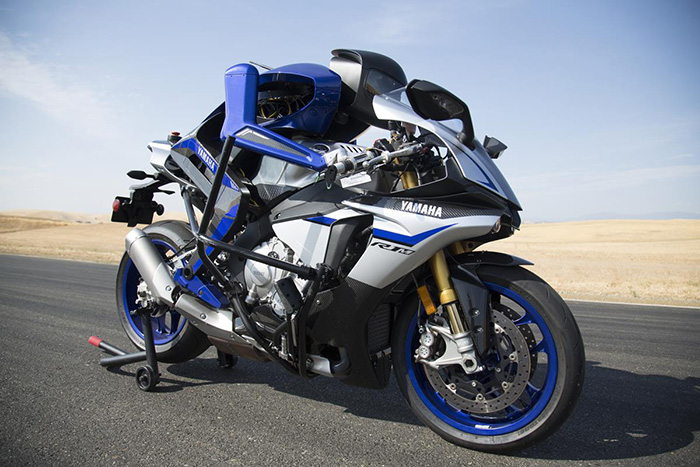
This autonomous motorcycle-riding robot combines the latest in motorcycle and robotics technology, and its purpose is to pioneer previously unexplored realms of research and development. Focusing on operation of the machine from a rider's standpoint without making any fundamental modifications to the motorcycle itself, MOTOBOT is now capable of riding at high speeds around a racetrack. The project goals set for 2017 were to clear the milestone of hitting over 200 kilometers per hour on a racetrack and to challenge MotoGP star Valentino Rossi to a battle of lap times. The complex underlying technologies and knowledge gained from the MOTOBOT project will be applied toward creating new value in our existing businesses as well as toward pioneering new businesses

YPJ-XC?(Reference vehicle? 
YPJ-ER (Reference vehicle? 
YPJ-EC?(Reference vehicle? 
YPJ-TC (Reference vehicle? 
These are new model proposals for our YPJ Series bringing new value to electrically power-assisted bicycles (e-bikes). Based on the YPJ-MTB Concept model exhibited at the 44
th Tokyo Motor Show in 2015, the YPJ-XC mounts our latest PW-X drive unit and is much closer to a production-ready model. In addition, three more YPJ Series models are on display, all mounting the PW-SE drive unit highly acclaimed in Europe for more power and a larger capacity battery: the YPJ-ER "crossover" (multi-purpose) road bike, the YPJ-EC flat-bar road bike and the YPJ-TC touring (trekking) bike.

Motor type = Blushless motor 
Battery type = Lithium-ion

YZR-M1?(Reference vehicle / Commemorative vehicle? 
This is Yamaha's racebike for MotoGP, the pinnacle class of world championship motorcycle road racing. The "M" in its name stands for its two "Missions" of feeding back technology gained in racing for use in our production models and winning the MotoGP championship title. Since its debut in 2002, it has won the title seven times.

Engine type = Liquid cooled 4-stroke 
Cylinder arrangement = In-line 4 cylinder 
Maximum output = 240 PS (176 kw) or more 
Transmission type = 6 speed 
Vehicle weight (wet) = 157 kg in accordance with FIM regulations

YZF-R6 (Production vehicle) 
This model represents the first major update of the YZF-R6 in nine years and brings further refinement to the model's famed high performance on the racetrack and on twisty mountain roads. Along with new styling drawing directly from Yamaha's latest R-Series models, it newly adopts electronics and components garnered from developing the YZF-R1 throughout the machine, achieving handling that helps bring out the best of the rider's performance on the track or the road.

Length x Width x Height = 2,040 mm x 695 mm x 1,150 mm 
Engine type = Liquid-cooled 4-stroke, DOHC, 4-valve 
Cylinder arrangement = In-line 4 cylinder 
Displacement = 599 cm
3 
Fuel supply system = Fuel injection 
Transmission type = Constant mesh 6-speed 
Vehicle weight (wet) = 190 kg

Star Venture (Production vehicle) 
This full-dress long-distance tourer is the flagship of Yamaha's cruiser model line-up. Its features include an infotainment system to amplify the fun of the journey, a body design combining a high-quality finish with a dynamic look of power, the latest in electronic control technology and an electric motor to slowly maneuver the bike forward or backward—a first for a production motorcycle. The audio system to bring greater enjoyment to long-distance outings was developed in collaboration with Yamaha Corporation with special focus on delivering an enjoyable audio experience at speed.

Length x Width x Height = 2,700 mm x 1,015 mm x 1,410 - 1,500 mm 
Engine type = Air-cooled, 4-stroke, OHV, 4-valve 
Cylinder arrangement = V-twin 
Displacement = 1,854 cm
3 
Fuel supply system = Fuel injection 
Transmission type = Constant mesh 6-speed 
Vehicle weight (wet) = 434 kgMT10DX EU

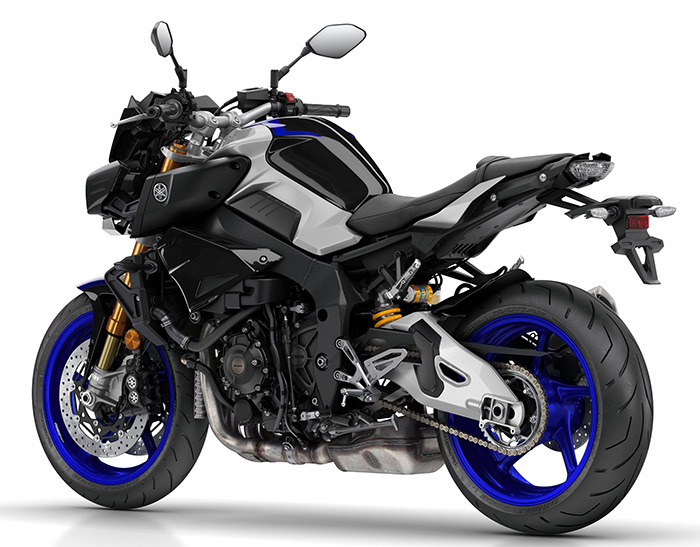
MT-10 ABS (Production vehicle) 
This MT Series flagship model is powered by a 997 cm
3 liquid-cooled in-line 4-cylinder crossplane crankshaft engine. It boasts Yamaha's most potent performance for the street and responds just as the rider intends while also packing several features making it well suited to a wide range of uses. Its styling is defined by the prominent presence of the powerful engine and a side view that accentuates the flow of power from the intake to exhaust.

Length x Width x Height = 2,095 mm x 800 mm x 1,110 mm 
Engine type = Liquid-cooled, 4-stroke, DOHC, 4-valve 
Cylinder arrangement = In-line 4-cylinder 
Displacement = 997 cm
3 
Fuel supply system = Fuel injection 
Transmission type = Constant mesh 6-speed 
Vehicle weight (wet) = 210 kg

MT-09 ABS (Production vehicle) 
This is the latest version of the MT-09 ABS, a model designed to deliver the joy of being in complete control of the machine in the everyday speed range. It newly adopts an Assist & Slipper clutch for smoother chassis behavior and lighter clutch lever pull, and also features a two-mode traction control system for smoother starts and to assist the rider in changing road conditions.

Length x Width x Height = 2,075 mm x 815 mm x 1,120 mm 
Engine type = Liquid-cooled, 4-stroke, DOHC, 4-valve 
Cylinder arrangement = In-line 3-cylinder 
Displacement = 845 cm
3 
Fuel supply system = Fuel injection 
Transmission type = Constant mesh 6-speed 
Vehicle weight (wet) = 193 kg

XSR700 ABS (Production vehicle) 
This road-going sport model features authentic styling and is powered by a 668 cm
3 4-stroke liquid-cooled in-line 2-cylinder engine with a 270° crankshaft. It offers performance for a relaxed and casual ride—even in city traffic—balanced with a body design aimed at stimulating the owner's imagination for possible customization. It is scheduled for release in Japan on November 6.

Length x Width x Height = 2,075 mm x 820 mm x 1,130 mm 
Engine type = Liquid-cooled, 4-stroke, DOHC, 4-valve 
Cylinder arrangement = In-line 2-cylinder 
Displacement = 688 cm
3 
Fuel supply system = Fuel injection 
Transmission type = Constant mesh 6-speed 
Vehicle weight (wet) = 186 kg

TMAX530 DX ABS (Production vehicle) 
This is the flagship model of the current MAX Series, which pioneered the category of "automatic-transmission supersport" models with the 2001 release of the first TMAX in Japan. The electronically controlled throttle delivering both smooth response and a powerful feel, lightweight aluminium frame and linked type rear suspension deliver sporty performance.

Length x Width x Height = 2,200 mm x 765 mm x 1,420 mm 
Engine type = Liquid-cooled, 4-stroke, DOHC, 4-valve 
Cylinder arrangement = In-line 2-cylinder 
Displacement = 530 cm
3 
Fuel supply system = Fuel injection 
Transmission type = V-belt automatic 
Vehicle weight (wet) = 218 kgX-MAX-250-ABS

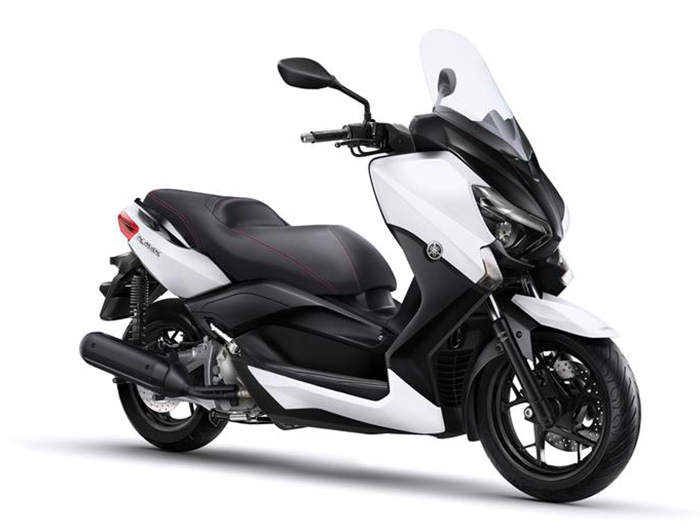
XMAX ABS (Production vehicle) 
This scooter is powered by a newly designed liquid-cooled 249 cm
3 "BLUE CORE" engine. To achieve its development concept of a machine to "MAXimize Commuting FUNctions," it adopts a range of features like a motorcycle-type front fork and a traction control system, but also plenty of underseat storage space and more. It is scheduled for release in Japan on January 25, 2018.

Length x Width x Height = 2,185 mm x 775 mm x 1,415 mm 
Engine type = Liquid-cooled, 4-stroke, SOHC, 4-valve 
Cylinder arrangement = Single-cylinder 
Displacement = 249 cm
3 
Fuel supply system = Fuel injection 
Transmission type = V-belt automatic 
Vehicle weight (wet) = 179 kg

TRICITY155 ABS (Production vehicle) 
This model takes a step further the new kind of fun, i.e., a sporty ride as well as great feeling of stability, and innovative styling proven with the Tricity 125. With added performance and features that heighten pride of ownership, this model can be ridden on expressways and expands the appeal of Yamaha's Leaning Multi-Wheel (LMW) world.

Length x Width x Height = 1,980 mm x 750 mm x 1,210 mm 
Engine type = Liquid-cooled, 4-stroke, SOHC, 4-valve 
Cylinder arrangement = Single-cylinder 
Displacement = 155 cm
3 
Fuel supply system = Fuel injection 
Transmission type = V-belt automatic 
Vehicle weight (wet) = 165 kgYZ450F-EU

YZ450F (Production vehicle) 
This is the top-end model of Yamaha's YZ Series of bikes for off-road competition. The 2018 model features a new frame boosting cornering performance and its off-road capabilities, and a new engine with specs to increase the feeling of power and usability. Also, the new Power Tuner smartphone app enables easier and more detailed engine setting changes.

Length x Width x Height = 2,185 mm x 825 mm x 1,285 mm 
Engine type = Liquid-cooled, 4-stroke, DOHC, 4-valve 
Cylinder arrangement = Single-cylinder 
Displacement = 449 cm
3 
Fuel supply system = Fuel injection 
Transmission type = Constant mesh 5-speed 
Vehicle weight (wet) = 111 kg
end bike test


2018 YAM MXT850 EU DNMG ACT 001-55392This large-displacement Leaning Multi-Wheeler (LMW) is powered by a liquid-cooled in-line 3-cylinder engine. This model is equipped with LMW technology to reduce the effects of changing ride environments and to deliver a high feeling of stability when cornering. It achieves excellent performance for spirited and sporty riding on various road surfaces and the capability to freely carve through the continuous corners of winding roads. The body design makes full use of the unprecedented front-end suspension mechanisms pairing 15-inch front wheels with dual-tube upside-down forks to visually accentuate the machine's sporty performance and create a high-quality look and feel at the same time. New Yamaha NIKEN. Ride the Revolution.2018 YAM MXT850 EU DNMG DET 011-55387
  • Length x Width x Height = 2,150 mm x 885 mm x 1,250 mm
  • Engine type = Liquid-cooled 4-stroke, DOHC, 4-valve
  • Cylinder arrangement = In-line 3-cylinder
  • Fuel supply system = Fuel injection 

2018 YAM MXT850 EU DNMG STA 002-55362The full information about the all-new Yamaha NIKEN will be unveiled on 6th November at 21.00 hrs. CET at the Yamaha 'Pioneers of Emotions' EICMA Press Premiere which can be viewed live on the Yamaha Motor Facebook page www.facebook.com/YamahaMotorEU/2018 YAM MXT850 EU DNMG STA 005-55365
end bike test


10 TC ValenciaCould one of the greatest motocrossers ever be eying a career change? Tony Cairoli’s appetite and curiosity to try a new MotoGP machine was satisfied last week in Valencia. We’ve seen the images so now hear what the Sicilian had to say on his RC16 debut
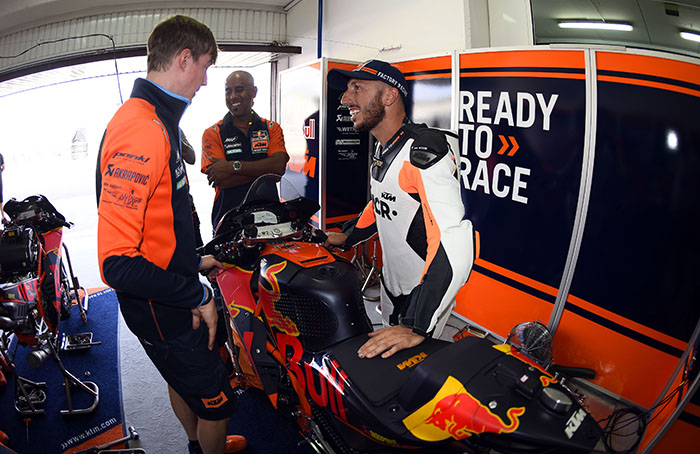
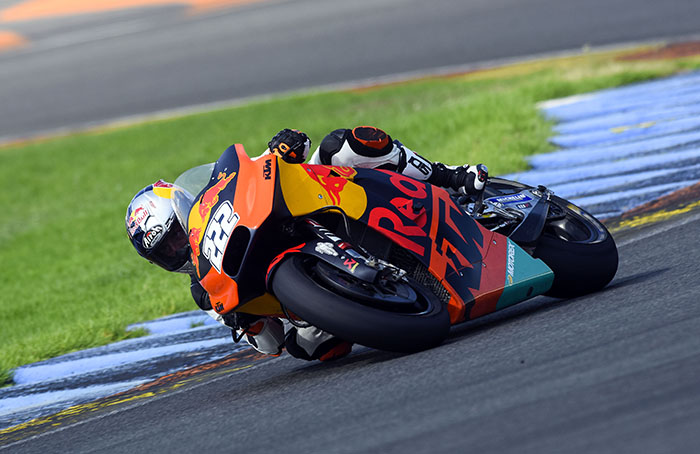
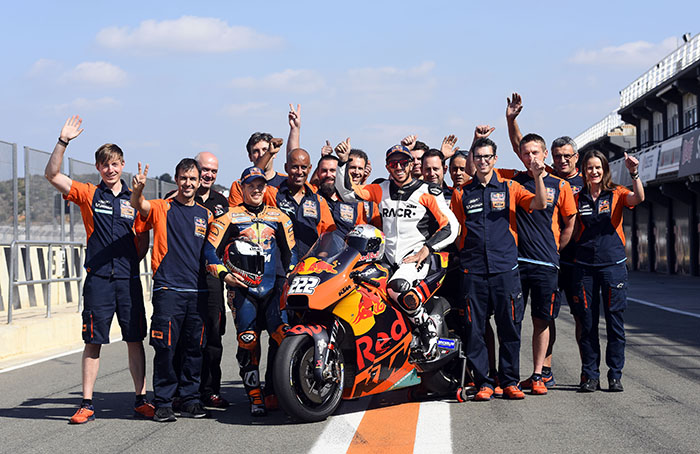
The last two weeks said a lot about MXGP World Champion Tony Cairoli. First he celebrated his wedding to Jill with family and friends and only a month after he’d won his ninth FIM crown. A few days later he’d delayed his honeymoon to quell the urge to run some laps on a MotoGP machine and joined the Red Bull KTM test team on a sunny day of work at the Ricardo Tormo circuit in Valencia. Good people, good times.07 TC Valencia

It was unusual to see the experienced 32 year old looking slight pensive in a race paddock. The unfamiliar full face Airoh helmet and leather suit was the first indication that this was a different examination of #222’s speed. There was then the howl of engine power and detailed briefing with the crew that are playing an important back-up role in what is a historic maiden term for the factory on the MotoGP grid. Cairoli even spent a few moments getting words of advice from official test rider Mika Kallio for what to expect from the fierce RC16, compared to the torquey blast of his 450 SX-F.

Soon Cairoli’s ‘222’ machine was deprived of tyre warmers and pushed into life. Tony got faster, more comfortable and more ‘cranked over’ as the test went on and he notched 22 laps.23 TC Valencia

“The first impressive thing is the braking and the big acceleration; it is very tricky to find the limit of a bike that feels so perfect and balanced,” he said. “The grip is the corners in amazing. It is ten years since I last tried a MotoGP bike and there is a huge improvement with the bike and corner speed. I only did a few laps but had a good feeling by the end and felt I could push more.”

“The reversed gearbox was another tricky thing in the first laps when I made a few mistakes but it was quite easy to adapt,” he added. “Luckily Mika was there and has so much experience. He gave me some helpful advice and I could follow him to find the right lines and correct some of the mistakes of the beginning: thanks Mika!”

“I was excited to come here but I didn't get time to do more laps, which was a shame so I hope next time I can do more and try to get near the limit,” TC said. “It was such an adrenaline rush to ride at more than 300kmph. We are not used to this speed. It was amazing.”25 TC Valencia

Cairoli was also afforded the chance to compare his discipline with that of the asphalt. “Obviously you are stuck to one line and you don't have the freedom to change like we do to have a better feeling,” he offered. “You just have to follow the best line and try to do everything perfectly.” 

“A big thanks to KTM and the test team for the opportunity and I hope I can go again. I like new challenges and to approach different things. It was the first time for me to get 59 degrees and my elbow on the ground!”

Although there was little danger of roost or visibility problems, Tony still had to deal with the phenomenal speed of another type of KTM. His touchpoint with the RC16 was actually a fitting story considering the success and prominence he gave to the-then pioneering 350SX-F with five MXGP titles between 2010-2004. Cairoli still rules his sport into his thirties and, like another famous Italian, shows no signs of slacking off the cable. end bike test


vandemarkWorld Superbike front-runner Michael van der Mark will jump on the Monster Yamaha Tech3 YZR-M1 to replace the recovering Jonas Folger at the Malaysian GP. The young Dutch rider rose through the ranks of the Superbike leagues before winning the World Supersport Championship in 2014. Some strong performances this year, including two podium finishes aboard the Pata Yamaha Official WorldSBK Team YZF-R1, leave the MotoGP paddock eager to see how Van der Mark will perform at the penultimate round of the 2017 World Championship.vandemark3

Michael van der Mark

"It goes without saying that I am really excited. I came quite close to getting the opportunity to ride a MotoGP bike a few weeks ago, but it didn't work out. Then Hervé called, and although I will have a busy schedule, I could not say no to this chance. I am very happy and I look forward to this adventure. Luckily, I know Sepang, but the MotoGP riders have done a lot of tests there this year, so everyone will be fast. However, I just want to enjoy this weekend, to improve myself and see how it is to ride the YZR-M1. At the moment, we have some good momentum in WorldSBK so I think it is the perfect time to jump on the Yamaha. I look forward to riding the bike and I want to thank Hervé and Yamaha for this opportunity."vandemark2end bike test


favicon4