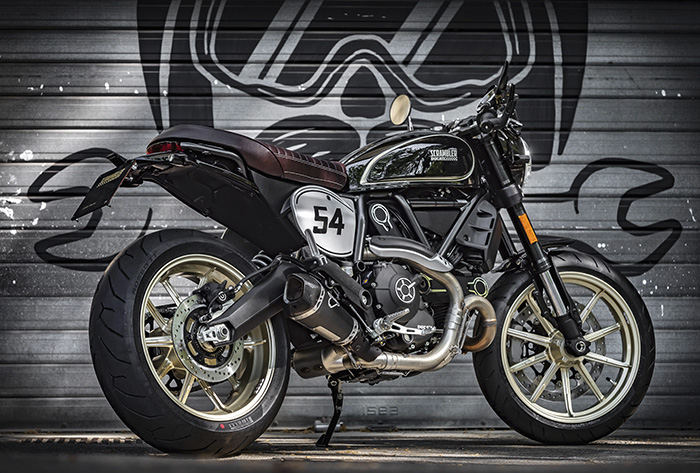

 Clint goes to the World Launch of the Scrambler Ducati Café Racer in the mountains around Bologna, the home of the Ducati Factory.
This was a launch with a difference, it’s Ducati’s Scrambler range which is expanding and the boys at the Red company, which is absolutely technologically driven, are very aware that they do not want to confuse anybody with regards to the direction in which this Scrambler brand is going. The newest edition I’m on about is the Café Racer. Normally these launches are held at exotic locations with high end presentations that include all the bells and whistles with the addition of informative videos and guys standing at the podium explaining the sharp end of the technology driven bike you are about to try, but not in this case. We stayed in down town Bologna at a normal hotel and the first 100 metres of the ride was to a Scrambler Café, which Ducati are hoping will soon be the start of something new around the world. The presentation was very informal with everyone sat around in a big circle at wooden tables and the people who were in charge of the project spoke us through the various steps it took to get the bike to where it is today. If like me you thought that Ducati just took the original one, clipped on some handlebars, rear-sets, sporty rims and tyres and viola, Café Racer, you’d be mistaken. There was a lot more thought and planning that went into it. The ride is completely different to the other Scrambler bikes.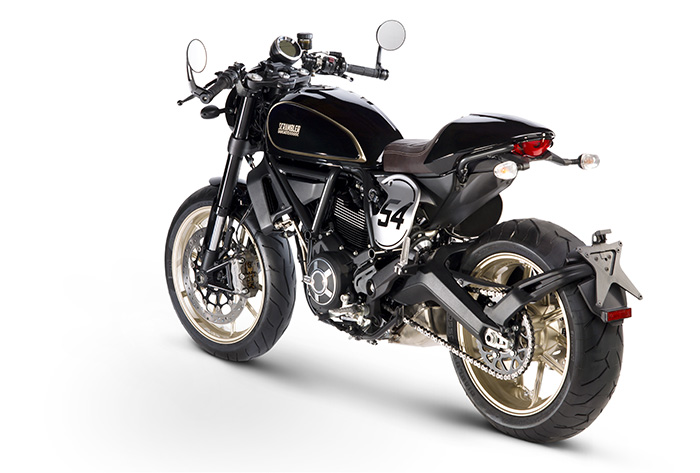 Firstly the look; the Scrambler Café Racer is bang on in terms of its looks. It’s small and is more than just a generic Scrambler with clip-ons and a black and gold, 70s-inspired 900SS Darmah paintjob. You can see that Ducati has used quite a few parts out of the same parts bin, but it’s all in the detail. While the rest of the six-strong Scrambler range (Desert Sled, Full Throttle, Classic, Icon and the Sixty2) has off-road ready 18” and 19” front wheels, the Café Racer has a more road-biased 17-incher. Fat (180 and 120), sticky Pirelli Diablo Rosso II road tyres are at each end, so this Scrambler can attack the bends. Also, the way in which you sit on it promotes brisk riding, but more about that later.
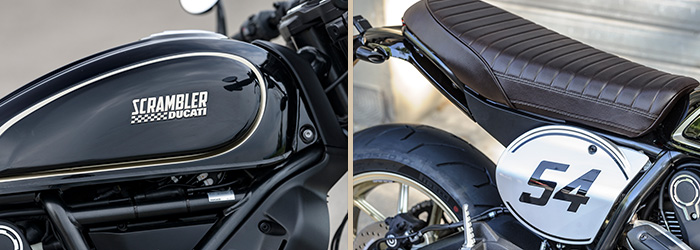 To cope with the extra cornering forces the Café Racer’s non-adjustable forks have longer upper tubes for extra rigidity and less flex and the front and rear damping is beefed up. This makes for very sure-footedness in the never-ending corners of the Bologna Mountains. The braking is taken care of by a big single disc up front gripped by a Brembo master cylinder. The normal Scrambler clocks are still being used but this time the front headlight assembly has moved down and it fits in better with the clip-on handlebars which have bar end mirrors. The bike also has a short front mudguard with big number boards on the side, displaying the number 54. What’s the relevance of 54 you may ask? This number belonged to Bruno Spaggiari, a highly successful Ducati racer who, in 1968, raced in the Mototemporada Romagnola, a classic road event at the time. He raced this race on a Ducati with an engine derived from the then Scrambler’s single cylinder 350cc engine. You’ve got to love the sentiment of the Italians! With regards to the seating arrangement, I’m fairly tall and found the comfort triangle for this type of bike very favourable, meaning handlebars not too low and out stretched and footpegs not up high and behind your neck. For a Café Racer Ducati has made it really comfortable. Mind you, after a day in the saddle and a gazillion corners later, my bum had reached the end of its endurance levels.
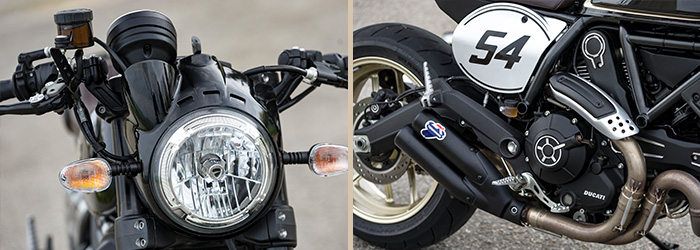 So what’s the ride like? The emphasis is on fun, so the 75hp, 803cc, 90 degree, L-shaped twin engine is not going to win any big drag races, but it’s the way in which it delivers its power to the competent chassis, which in turn revels with the low weight of the bike (188kg full of fuel), that makes it a blast to ride; you can seriously flick it around. The power will never get you into trouble but don’t forget, you still have an 800cc motor pushing you forward, it’s not slow and the sound is very typically Ducati V-twin. We only did a 200km loop and, when I tell you that it felt like there were 100 corners in every kilometre, I’m not lying. We were riding up and down mountains following the contour lines to the bottom and then back up again criss-crossing it all the time. If there was going to be a flaw in the handling department, it would have reared its head at that point. As a matter of fact, I cannot think of another bike I’d rather have been on for that journey. If I think about it, because this location is so close to the factory, these roads would definitely have been the ones on which the early Ducatis would have been tested and that on its own made this moment even more memorable.
 Obviously, because this forms part of the Scrambler range, the list of accessories is unending with buyers being able to empty the last cent out of their wallets. The range goes from biking accessories, like a double seat, exhausts and all other bits and then includes clothing from shoes to t-shirts and the mandatory classic looking helmets. In staying with this theme of the bike, I’m convinced very few buyers will leave their bikes 100% standard, as that will be against the original philosophy. At R164,000, it’s fairly pricey but, then again, it is a Ducati at heart and that on its own makes it desirable.
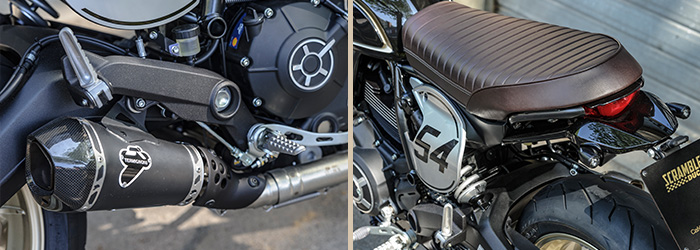 The Scrambler Ducati Café Racer reinterprets what was one of the most influential movements in the history of motorcycling, recreating a legend with a contemporary character reflecting the essence of the Scrambler, this bike is going to be a hit.